There are over 300 operational renewable natural gas facilities in the United States right now, with another 200-plus in development. Most of them exist because of policy. The federal Renewable Fuel Standard. California's Low Carbon Fuel Standard. State-level mandates in Oregon, Washington, New York, and a growing list of others. These programs were designed to decarbonize the gas supply. They are also, almost by accident, creating the infrastructure for a new CO₂ supply chain.
Nobody in the policy world set out to solve the CO₂ shortage problem. But that is exactly what is happening.
The Chemistry That Policy Ignores
When you upgrade raw biogas to pipeline-quality renewable natural gas, you are separating methane from everything else. The largest component of that everything else is CO₂. Depending on the feedstock, raw biogas contains 35 to 50 percent carbon dioxide by volume. An upgrader processing 1,000 standard cubic feet per minute of raw biogas is separating 350 to 500 scfm of CO₂ continuously.
At most facilities today, that CO₂ goes straight to atmosphere. The operator paid to process it, separated it cleanly, and then vented it. The RFS credits and LCFS revenue are tied to the methane. The CO₂ is treated as waste.
This is a structural blind spot. The policy frameworks that made these facilities economically viable never contemplated the CO₂ byproduct as a commodity. But it is one. And a valuable one, if you can purify it to the right specification.
Why This Matters for CO₂ Buyers
The U.S. merchant CO₂ market depends on a handful of concentrated sources. Ammonia plants along the Gulf Coast. Ethanol facilities in the Midwest. Natural wells like Jackson Dome. When any one of these goes offline, and they do regularly, prices spike and entire regions go on allocation. We saw it in 2022. We saw it again in smaller pockets in 2024.
RNG facilities offer something fundamentally different. They are distributed geographically, not clustered in two or three regions. They run year-round on waste feedstocks that do not fluctuate with crop prices or fertilizer demand. And there are hundreds of them, with more coming online every quarter. No single facility shutting down creates a regional crisis.
For a beverage company in the Southeast or a food processor in the Mid-Atlantic, an RNG-sourced CO₂ supplier 100 miles away is a fundamentally more resilient option than a Gulf Coast ammonia plant 500 miles away.
The Beverage Grade Gap
There is a catch. Raw CO₂ from an RNG upgrader is not ready for beverage applications. Biogas-derived CO₂ can contain trace sulfur compounds, siloxanes, and volatile organic compounds that must be removed to meet ISBT standards. The International Society of Beverage Technologists sets the specification that every major beverage company requires. Contaminants are measured in parts per billion. There is no margin for close enough.
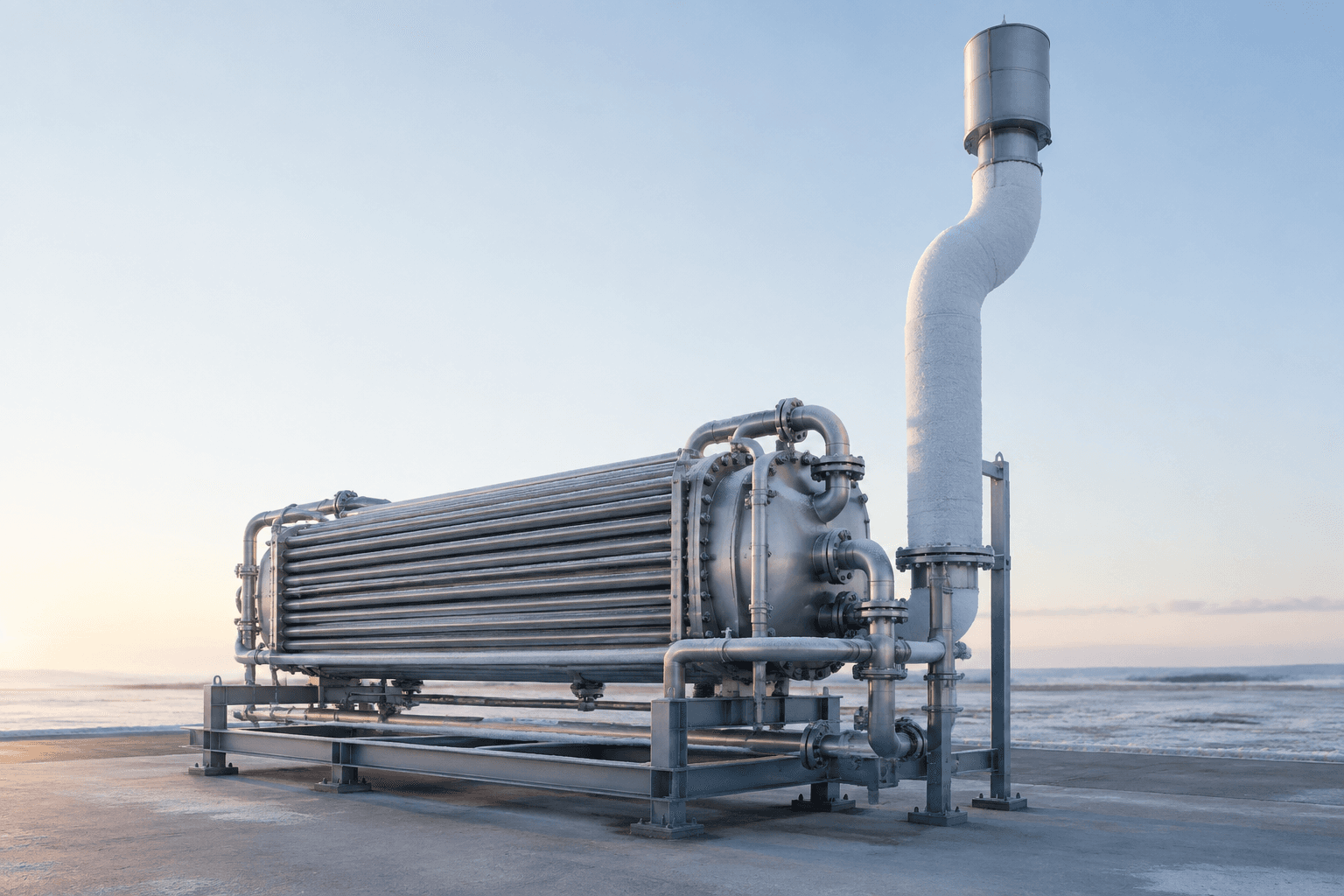
This is the technical barrier that has kept most RNG operators from monetizing their CO₂. Membrane separation and PSA systems can get you to industrial grade. Beverage grade requires cryogenic purification, the kind of deep cold processing that freezes out contaminants conventional systems cannot touch.
CleanCycleCarbon's patent-pending cryogenic process was built specifically for this problem. We take the CO₂ stream from an RNG upgrader and purify it to beverage grade, meeting the full ISBT specification. That opens the largest and most stable end market for CO₂: food and beverage.
Policy Stacking Is Changing the Economics
The economics of capturing CO₂ from RNG facilities have shifted in the last two years. Section 45Q provides a tax credit for carbon capture and sequestration, but it also applies to carbon utilization. Capturing CO₂ from an RNG upgrader and selling it as a commodity product qualifies. Layer that on top of the RIN values from the RFS and the LCFS credits in states like California and Oregon, and the revenue stack for an RNG facility operator becomes significantly more attractive.
This is not theoretical. The 45Q credit for utilization is currently $60 per metric ton. Beverage grade CO₂ sells into a market where delivered prices regularly exceed that. An RNG operator who captures and purifies their CO₂ is generating two revenue streams from a single waste product: carbon credits and commodity sales.
The policy was not designed to create this outcome. But the incentive structures line up in a way that makes CO₂ capture from RNG facilities increasingly hard to ignore.
What Comes Next
Every state that adopts an RNG mandate or clean fuel standard is effectively authorizing the construction of new CO₂ sources. Colorado, Michigan, Minnesota, and several others are in various stages of policy development. The federal RFS continues to drive RNG project economics. The pipeline of new facilities is not slowing down.
The question is whether the CO₂ industry recognizes what is being built. Hundreds of distributed, year-round CO₂ sources, located closer to demand centers than the legacy supply infrastructure. Facilities that exist because policy made them viable, producing a byproduct that the CO₂ market desperately needs.
We are not waiting for the industry to figure it out. CleanCycleCarbon's Lewiston, NC facility entered continuous commercial beverage grade production in December 2024, purifying CO₂ from an RNG upgrader to beverage grade. The model works. The policy environment is making it replicable. And the CO₂ market is overdue for a supply chain that does not collapse every time a single plant shuts down.