Section 45Q was signed into law in 2008. The Renewable Fuel Standard dates to 2005. California's Low Carbon Fuel Standard launched in 2011. None of these policies were designed to work together. None of them were written with CO₂ supply chains in mind. But in 2026, the intersection of all three is doing something none of them could do alone: making distributed CO₂ capture from biogas facilities economically compelling.
This is not a policy analysis paper. This is what we see on the ground, working with RNG operators who are evaluating whether to capture their CO₂ stream or keep venting it.
The RFS Built the Facilities
The federal Renewable Fuel Standard created the economic foundation for the U.S. RNG industry. By requiring obligated parties to blend renewable fuels, the RFS generated a market for biomethane through Renewable Identification Numbers (RINs). D3 RINs, which apply to cellulosic biofuel including landfill and digester gas, have traded between $1.50 and $3.50 per RIN over the past several years. That revenue stream is what made hundreds of biogas upgrading projects bankable.
Today there are over 300 operational RNG facilities in the U.S., with another 200-plus in development. Every single one of them separates CO₂ from methane as a core part of the upgrading process. Raw biogas is typically 35 to 50 percent CO₂ by volume. At a facility processing 1,500 scfm of raw biogas, that is 500 to 750 scfm of CO₂ being separated continuously. At nearly all of these facilities, that CO₂ is vented to atmosphere.
The RFS did not intend to create CO₂ sources. But it built the infrastructure that produces them.
The LCFS Made It Spread
California's Low Carbon Fuel Standard added a second revenue layer that accelerated RNG development, particularly on the West Coast. LCFS credits reward fuels with lower carbon intensity scores, and RNG from dairy digesters and organic waste can achieve negative CI scores. That means the credits alone can exceed the commodity value of the gas.
More important than the California market itself is the model it created. Oregon adopted a Clean Fuels Program in 2016. Washington followed in 2023. New York, Colorado, Minnesota, and several other states have active proposals or early-stage programs modeled on the LCFS framework. Each new state that adopts a clean fuel standard expands the addressable market for RNG projects and, by extension, creates more biogas upgrading facilities that produce concentrated CO₂ streams.
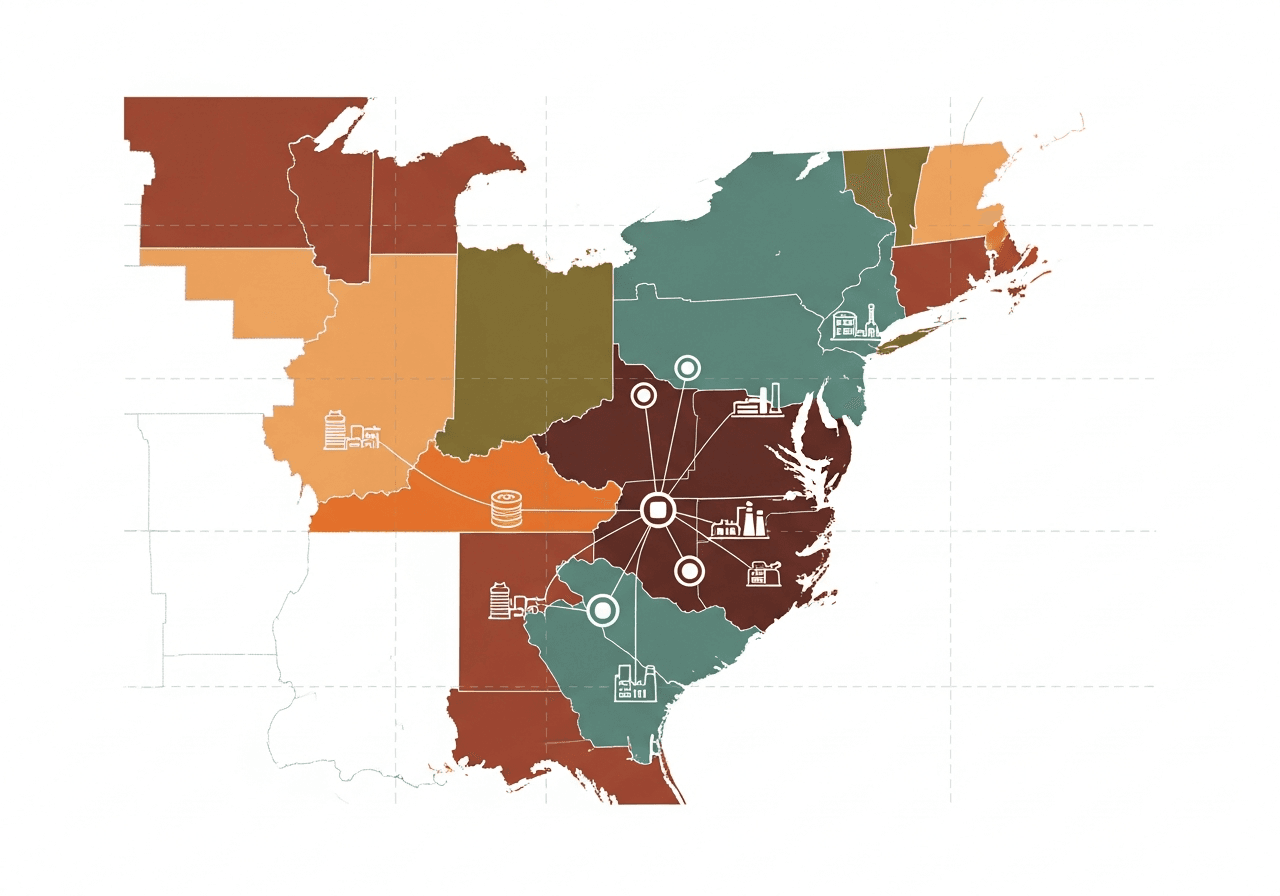
The geographic spread matters. Unlike the legacy CO₂ supply chain, which depends on Gulf Coast ammonia plants and Midwest ethanol facilities, LCFS-driven RNG projects are distributed across the country. Dairy operations in Wisconsin. Landfills in North Carolina. Wastewater treatment plants in Oregon. Each one is a potential CO₂ source located closer to regional demand than any existing merchant supplier.
45Q Closes the Economics
Section 45Q now provides a tax credit of $85 per metric ton for CO₂ captured at point sources, whether sequestered underground or put to commercial use. The One Big Beautiful Bill Act equalized utilization and sequestration rates in 2025, eliminating the gap that previously penalized productive use of captured CO₂. Capturing CO₂ from a biogas upgrader and selling it as a commodity product into the food and beverage market counts as utilization.
This is where the three policies converge. An RNG operator already has the RIN revenue and potentially LCFS credits supporting the core business. The CO₂ stream is already being separated as part of normal operations. Adding a capture and purification system does not require rebuilding the facility. It requires bolting on downstream processing for a stream that already exists. The 45Q credit offsets a significant portion of the capital and operating cost of that purification system. And the purified CO₂ itself sells into a market with real demand.
The math works differently than it did even three years ago. Before the IRA expanded 45Q, an RNG operator evaluating CO₂ capture had to justify the project on commodity revenue alone. Now the tax credit provides a floor that de-risks the investment. Layer commodity sales on top, and the project economics shift from marginal to attractive.
The Beverage Grade Requirement
Policy creates the economic conditions. It does not solve the technical problem. Raw CO₂ from a biogas upgrader contains trace sulfur compounds, siloxanes, and volatile organics that must be removed before the product can enter the food and beverage supply chain. The International Society of Beverage Technologists sets the specification, and contaminants are measured in parts per billion. Industrial grade is not enough. The highest-value, most stable end market for CO₂ requires beverage grade purity.
This is the gap that CleanCycleCarbon was built to close. Our patent-pending cryogenic purification process takes the CO₂ stream from an RNG upgrader and brings it to full ISBT beverage grade specification. Our Lewiston, NC facility entered continuous commercial beverage grade production on that basis in December 2024. The technology works with the concentrated CO₂ stream that every biogas upgrader already produces.
What This Means for the CO₂ Market
The U.S. merchant CO₂ market has experienced supply disruptions roughly every 18 to 24 months for the past decade. The root cause is concentration. Too few sources, too geographically clustered, too dependent on industries that shut down for maintenance or respond to unrelated commodity cycles. When a major ammonia plant along the Gulf Coast goes offline for turnaround, CO₂ buyers hundreds of miles away go on allocation.
The regulatory stack of RFS, LCFS, and 45Q is building the alternative. Not by design, but by consequence. Hundreds of distributed biogas facilities, operating year-round on waste feedstocks, producing CO₂ as a byproduct of their core operation. These facilities do not shut down for crop cycles. They do not respond to fertilizer demand. They run because waste does not stop.
The policy infrastructure is in place. The facilities exist. The economics now work. The only remaining question is how quickly the CO₂ industry recognizes that the supply chain it has been waiting for is being built by policies that were never intended to build it.