A typical RNG upgrading facility processing 3,000 scfm of raw biogas is venting roughly 15,000 to 20,000 tons of CO₂ per year. That is not a rounding error. That is a commercial-scale CO₂ stream going straight to atmosphere, every hour of every day the facility operates.
Most RNG operators know they are venting CO₂. It is a basic fact of biogas upgrading. Raw biogas from a landfill or digester is typically 55 to 65 percent methane and 35 to 45 percent CO₂, plus trace contaminants. The upgrader separates the methane for pipeline injection and exhausts the CO₂. That is the process working as designed.
What most operators do not know is that their waste CO₂ stream, once captured and purified, can meet beverage grade specifications and sell into a market that has been short on supply for years.
The Numbers Behind the Vent Stack
The math is straightforward. If your facility processes 3,000 scfm of biogas at 40 percent CO₂ content, you are producing roughly 1,200 scfm of CO₂. Over a year of continuous operation, that works out to approximately 17,000 tons. Larger facilities processing 5,000 scfm or more can produce upward of 25,000 to 30,000 tons annually.
These are not trivial volumes. For context, a mid-size regional CO₂ distributor might sell 10,000 to 30,000 tons per year. A single RNG facility can supply a meaningful share of a regional CO₂ market. The product is just going up the stack instead.
Across the U.S., there are over 200 operational RNG facilities, with dozens more in development. The total CO₂ being vented from these sites is measured in millions of tons per year. This is not a niche opportunity. It is one of the largest untapped sources of commercial CO₂ in the country.
Why This CO₂ Has Value
The U.S. industrial CO₂ market is structurally undersupplied. The 2022 shortage made this visible to the broader market, but the underlying dynamics have been building for years. Most commercial CO₂ in the U.S. comes from ammonia production, ethanol fermentation, and natural gas processing. These sources are concentrated, correlated with commodity prices, and prone to simultaneous curtailment.
Beverage grade CO₂, the highest purity specification, is where supply is tightest and margins are strongest. Meeting ISBT beverage grade standards requires 99.90 percent purity with strict limits on benzene, sulfur compounds, moisture, and dozens of other contaminants. Not every CO₂ source can get there. But biogas-derived CO₂, properly purified, absolutely can.
The key advantage of CO₂ from RNG upgraders is that it is biogenic. It originates from the decomposition of organic material, not from burning fossil fuels. This matters increasingly to buyers who are tracking Scope 3 emissions and to regulators who differentiate between biogenic and fossil carbon. Biogenic CO₂ is carbon neutral by definition. For beverage companies, food processors, and any buyer with sustainability commitments, that distinction has real procurement value.
What It Takes to Get There
Raw CO₂ from a biogas upgrader is not beverage grade. It typically contains residual methane, hydrogen sulfide, siloxanes, volatile organic compounds, and moisture levels that are well above ISBT limits. Getting from raw off-gas to beverage grade requires a dedicated purification system.
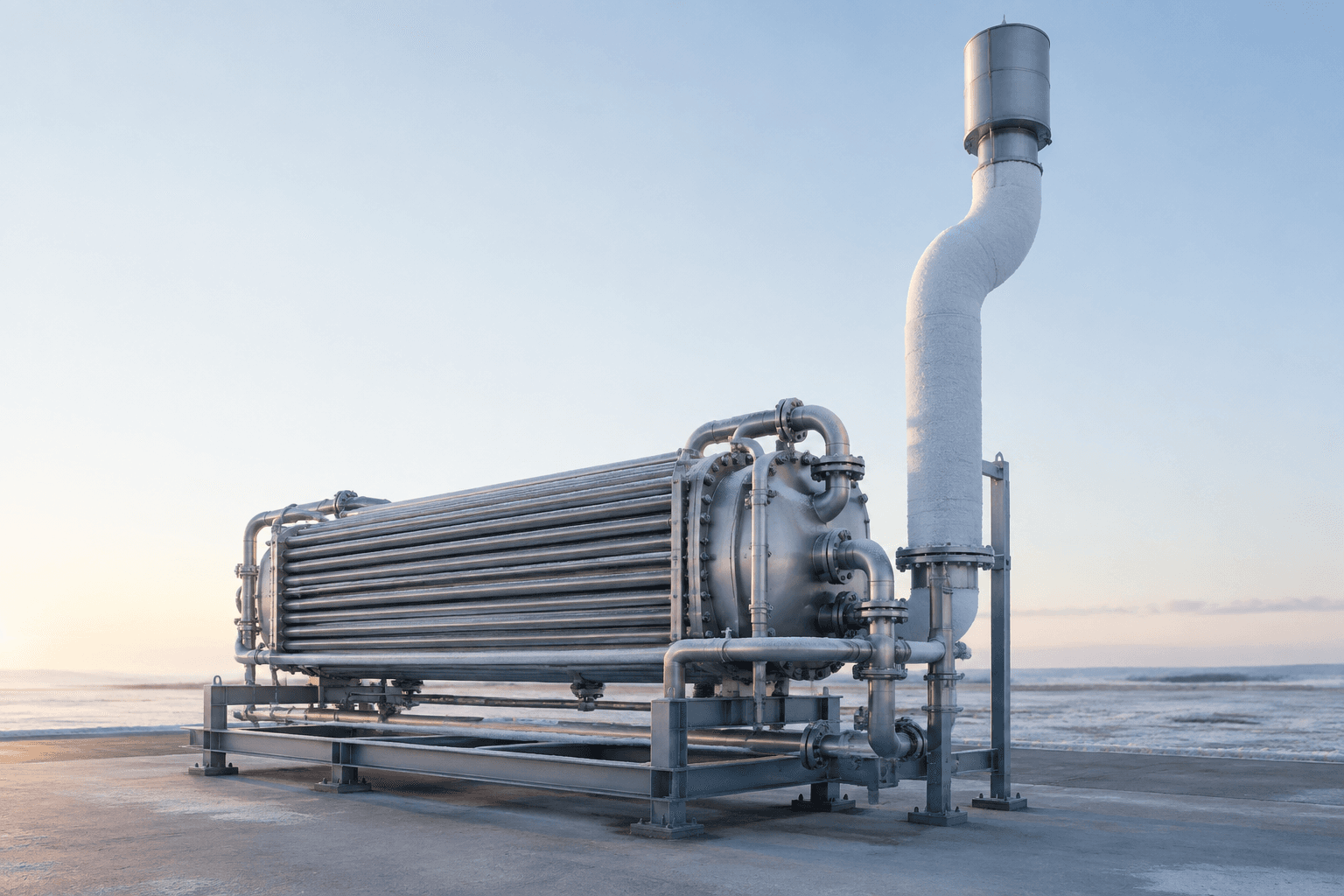
Cryogenic purification is the most effective path. The process compresses and cools the raw CO₂ stream through a series of stages, selectively removing contaminants at different temperature thresholds. Sulfur compounds condense out at one stage. Moisture freezes out at another. The final product is a liquid CO₂ stream that meets or exceeds ISBT specifications across all parameters.
The purification equipment co-locates at the RNG facility. There is no need to transport raw gas. The CO₂ stream comes directly from the upgrader exhaust, feeds into the purification system, and exits as a storable, transportable liquid product ready for distribution.
The Operator's Economics
For an RNG operator, the economics of CO₂ capture look different than they do for a greenfield carbon capture project. The feedstock is already there. You are already processing the biogas. You are already separating the CO₂. The incremental step is capturing and purifying what you are currently venting, not building a new gas processing facility from scratch.
This means the capital and operating costs are layered on top of an existing revenue-generating operation. The RNG revenue stream from pipeline injection and RIN credits does not change. The CO₂ revenue is additive. It is a second product from the same feedstock, using the same facility footprint.
There is also a 45Q tax credit angle. The Inflation Reduction Act provides $60 per ton for CO₂ that is captured from industrial sources and utilized. CO₂ captured from an RNG upgrader and sold as beverage grade product qualifies. At 15,000 to 20,000 tons per year, the 45Q credit alone represents a significant revenue line before accounting for product sales.
Why This Has Not Happened at Scale Yet
If the economics make sense and the supply is there, the obvious question is why more RNG operators are not already doing this. The answer is straightforward: it is not their core business.
RNG developers and operators are gas processing companies. They build facilities to produce renewable methane. Their expertise is in biogas cleanup, pipeline interconnection, and navigating the RIN and LCFS credit markets. CO₂ purification to beverage grade is a different technical discipline with a different customer base and different regulatory requirements. FDA registration, ISBT compliance, food safety certifications. These are not trivial to build from scratch.
The practical path is partnership. An RNG operator provides the site, the gas stream, and the existing facility infrastructure. A CO₂ purification partner provides the capture technology, the quality control systems, and the market access. Both sides do what they are built to do.
What This Means for the CO₂ Market
The U.S. CO₂ supply chain needs new sources. The current supply base is too concentrated, too correlated with commodity cycles, and too geographically uneven to serve a market that keeps growing. Beverage producers, food processors, and industrial users need supply they can count on.
RNG facilities are distributed across the country, operating on feedstocks that are independent of natural gas prices and ammonia production economics. They run continuously. They produce CO₂ as a fixed byproduct of their core process. If even a fraction of the 200-plus operational RNG sites in the U.S. began capturing and purifying their CO₂ output, it would meaningfully change the supply picture for regional CO₂ markets.
At CleanCycleCarbon, this is the model we are building. Our facility in Lewiston, NC co-locates at an RNG site, captures the CO₂ that was previously vented, and purifies it to FDA registered beverage grade using our patent-pending cryogenic technology. Lewiston entered continuous commercial beverage grade production in December 2024, proving the economics and the product quality at commercial scale. The opportunity is not theoretical. It has been built.
If you operate an RNG facility and have not looked at what your CO₂ stream is worth, it is worth a conversation.