Loading…

Loading…
FDA-registered. Beverage grade. Produced in the US from captured industrial emissions.
CleanCycleCarbon supplies FDA-registered, beverage grade CO₂ produced in the United States from captured biogenic and industrial emissions, certified to the ISBT specification at 99.9% minimum purity with a certificate of analysis on every batch. Buyers are beverage bottlers, food processors, and industrial users who want a source that does not depend on ammonia turnarounds or ethanol seasonality.
Carbonation of soft drinks, beer, sparkling water, and other beverages. Beverage-grade purity is required.
Modified atmosphere packaging, chilling and freezing, pH control, and produce preservation. Food-grade certification is required.
Welding and metal fabrication, fire suppression systems, water treatment, chemical manufacturing, and pH adjustment in industrial processes.
Greenhouse CO₂ enrichment for crop yield improvement.
Certified, traceable CO₂ for laboratory applications requiring precise specifications.
pH adjustment and treatment processes at water treatment facilities.
Every one of these applications requires a consistent, certified, traceable supply. Disruptions have real costs: spoiled product, halted production lines, lost contracts.
US CO₂ from concentrated sources
Last major shortage year
Domestic production
The US CO₂ market depends on a small number of production sources concentrated in specific regions. When those sources reduce output, whether due to planned maintenance, feedstock shifts, or economic factors, supply drops and prices spike.
The 2022 shortage affected breweries, food processors, and manufacturers across the country.
CleanCycleCarbon addresses this by producing CO₂ directly from emissions sources at industrial facilities. Our plants produce regardless of commodity market conditions. Supply is local. Source is consistent. The product is certified.
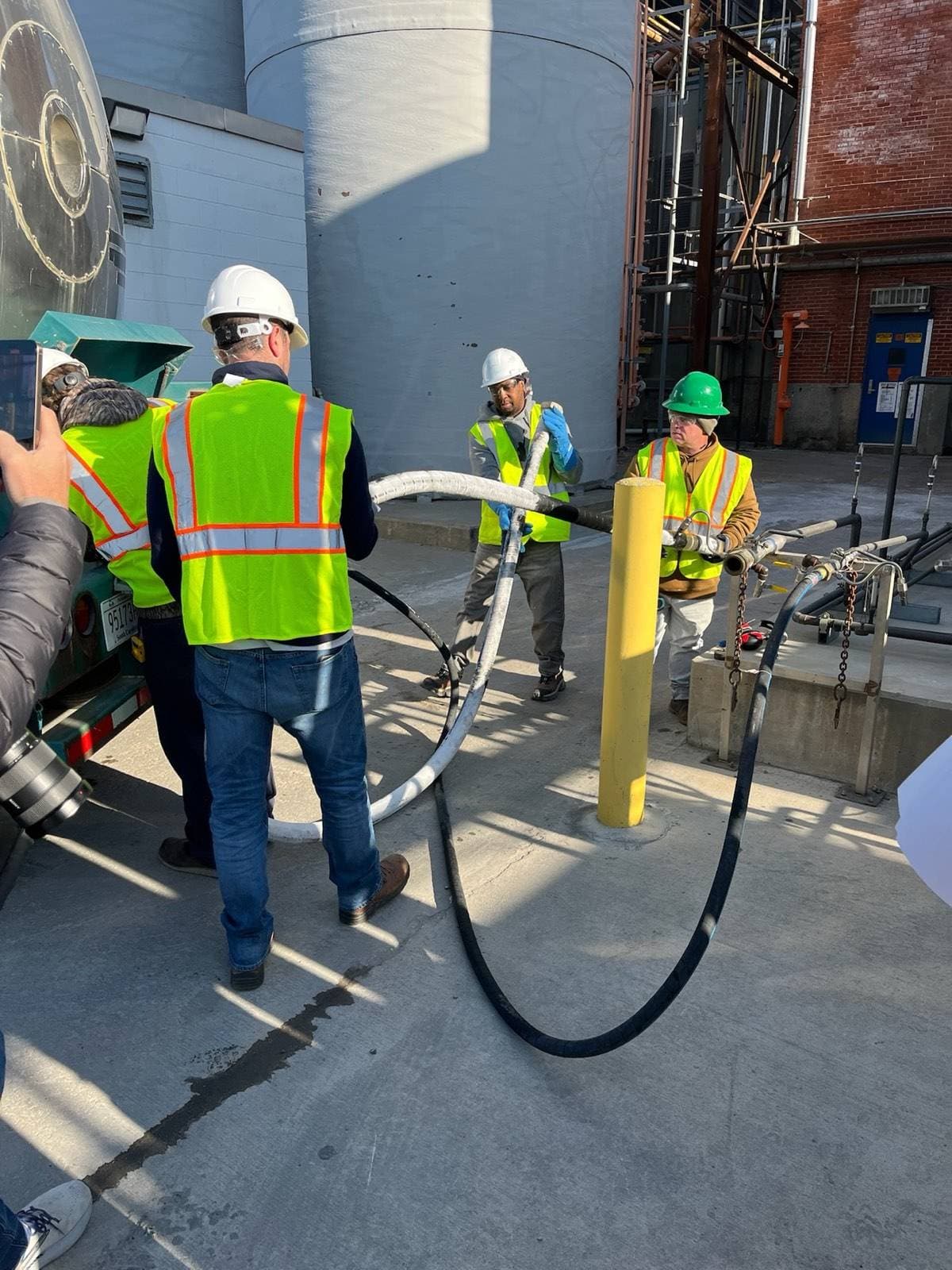
CleanCycleCarbon operates on-site at industrial host facilities. We capture CO₂ from the facility's emissions, purify it using our proprietary cryogenic process, and make it available to commercial buyers as a certified product.
The first facility, in Lewiston, NC, entered continuous commercial beverage grade production in December 2024. Additional capacity is in development, and each new capture project adds supply in the region where it is built.
CleanCycleCarbon sells through established distribution partners, who move product to commercial end users. Contact us to discuss supply availability.
A shortage reaches a bottling plant as an allocation notice: the distributor cuts every customer to a share of contracted volume. By then the upstream cause, an ammonia turnaround or a wave of ethanol idling, is weeks old. Three things a bottler can do, in the order they pay off:
From a producer whose source does not move with the shortage. US shortages come from ammonia turnarounds and ethanol idling, so a bottler should qualify a biogenic or captured-source producer before the next one: an independent capture operator such as CleanCycleCarbon, an ethanol-site liquefier in a different region, or on-site capture. The US CO₂ Supply Watch shows which sources are currently disrupted.
A bottling plant does not generate its own CO₂, so it has three routes: a second merchant contract drawing from a different upstream source, an offtake agreement with an independent biogenic producer within trucking range, or on-site capture of its own boiler emissions. The biogenic CO₂ producers table names each producer with its source type so a buyer can see which share the ammonia and ethanol exposure of the current supplier.
Biogenic CO₂ is reported outside the GHG Protocol scopes, so moving from ammonia-sourced CO₂ to biogas, fermentation, or direct air capture CO₂ changes Scope 3 accounting as well as supply risk. The qualifying question is the same as for any supplier: can the producer certify to the ISBT beverage grade specification, 99.9% minimum purity, with a certificate of analysis on every batch.
Contact us to discuss volume, specifications, and supply options.