A fully loaded CO₂ tanker truck burns roughly one gallon of diesel per six miles. A typical delivery run from a Gulf Coast ammonia plant to a beverage distributor in the Carolinas covers 500 miles or more. That is 80-plus gallons of diesel to deliver 20 tons of a gas that is itself a greenhouse gas. Nobody puts that on the sustainability report.
But the math is real. And for companies that have made public commitments around Scope 3 emissions, the CO₂ they buy to carbonate drinks, flash-freeze food, or treat water carries an embedded carbon cost that most procurement teams have never calculated.
The Emissions You Are Not Counting
Scope 3 accounting asks companies to measure the emissions embedded in their purchased goods and services. For most food and beverage companies, CO₂ is a line item that gets a generic emissions factor from a database. Nobody calls the gas supplier to ask how far the truck drove or where the CO₂ was originally captured.
Here is what that supply chain actually looks like for a lot of the country. CO₂ is captured at a large industrial facility, an ammonia plant or ethanol refinery. It is liquefied, loaded into a cryogenic tanker, and driven hundreds of miles to a regional distribution terminal. From there, it is loaded onto another truck and delivered to the end customer. Every transfer, every mile, and every boil-off event along the way adds emissions.
The irony is hard to miss. You are burning fossil fuel to transport a greenhouse gas so that someone can put bubbles in a can of seltzer. The product itself is carbon dioxide, and the process of getting it to you creates more of it.
Why the Source Matters as Much as the Distance
Distance is only half the equation. The other half is where the CO₂ comes from in the first place. Traditional merchant CO₂ is a byproduct of fossil-derived industrial processes. Ammonia production uses natural gas as a feedstock. Ethanol plants use corn, which is closer to biogenic, but the CO₂ capture and purification still happens at large centralized facilities that require long-haul distribution.
CO₂ captured from renewable natural gas upgrading is different in a fundamental way. RNG is produced from organic waste, landfill gas, or agricultural digesters. The carbon in that gas was recently in the atmosphere, absorbed by plants, consumed by animals or decomposed in a landfill. When you capture the CO₂ from an RNG upgrader, you are recovering biogenic carbon that would have been vented to atmosphere anyway. You are not adding new fossil carbon to the cycle.
That distinction matters for any company tracking biogenic versus fossil carbon in their supply chain. It also matters for the RNG operator, who is currently venting 35 to 45 percent of their gas stream as waste CO₂. Capturing it turns a liability into a product.
What Distributed Capture Changes
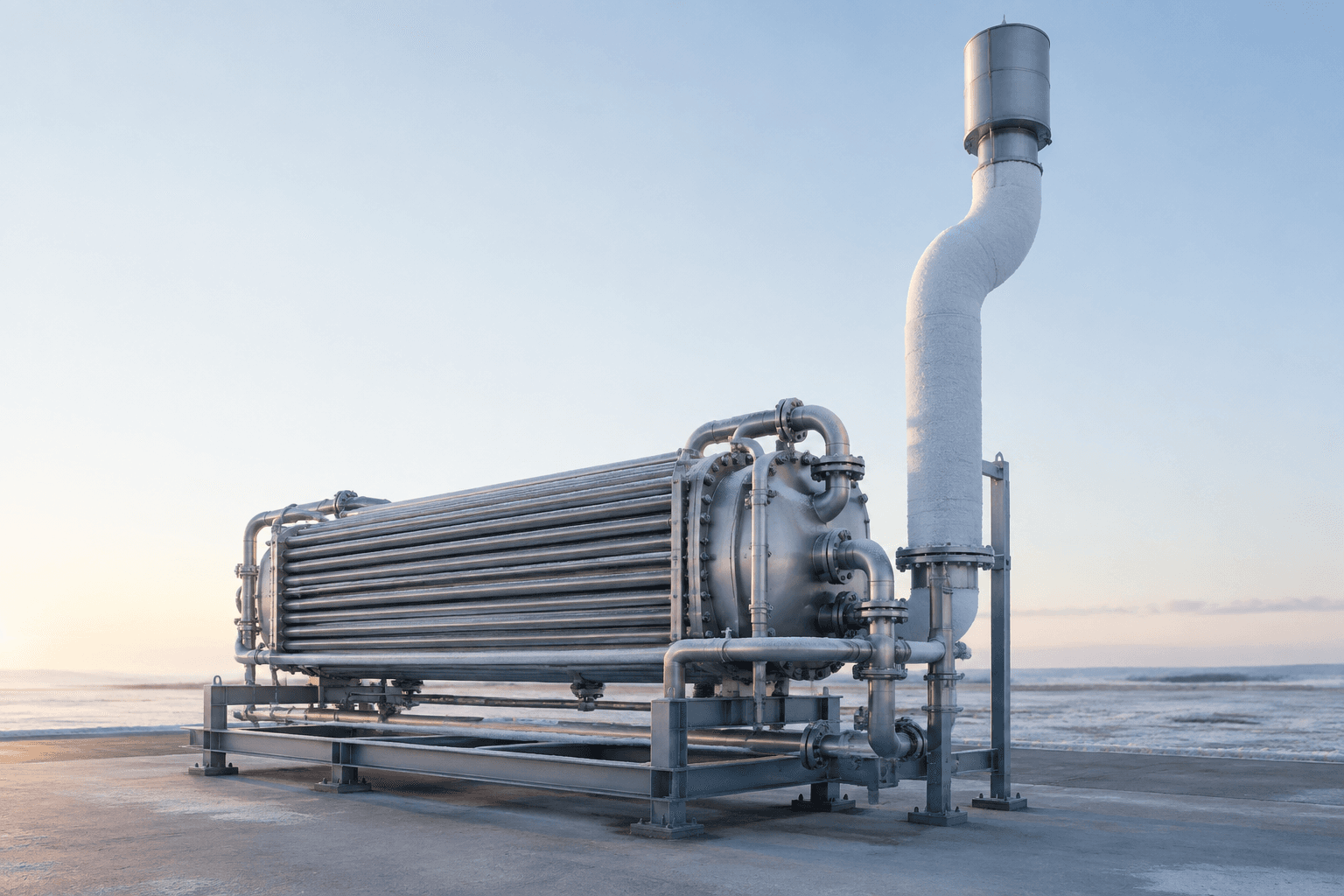
CleanCycleCarbon builds CO₂ purification facilities at RNG upgrader sites. Instead of one massive plant shipping product across six states, you have smaller facilities producing beverage grade CO₂ within 100 to 150 miles of end customers. The sustainability math shifts in three ways.
First, transport emissions drop dramatically. A 100-mile delivery versus a 500-mile delivery is not a 5x reduction because trucks still need to make the return trip empty and there are fixed overhead costs. But real-world numbers show 60 to 70 percent fewer transport-related emissions per ton delivered.
Second, the CO₂ itself is biogenic. For companies that separately report biogenic and fossil emissions, switching from ammonia-derived CO₂ to RNG-derived CO₂ moves the line item from one column to the other. The total quantity does not change, but the carbon accounting does.
Third, capturing CO₂ that was being vented to atmosphere is a net reduction. Every RNG upgrader in the country is currently releasing concentrated CO₂ as a waste product. That CO₂ is going into the atmosphere whether we capture it or not. Capturing it and putting it to productive use displaces fossil-derived CO₂ that would have been produced elsewhere.
The Beverage Grade Requirement Makes This Real
Sustainability claims are only valuable if the product meets spec. A food or beverage company cannot switch to a lower-carbon CO₂ source if that source cannot hit the ISBT purity standard. Contaminants measured in parts per billion, benzene, hydrogen sulfide, total sulfur, acetaldehyde, determine whether a load is accepted or rejected. There is no sustainability credit for delivering CO₂ that fails the purity test.
This is where the technical work matters. Capturing CO₂ from an RNG upgrader is straightforward. Purifying it to beverage grade using cryogenic processing so that every load meets the same specification as CO₂ from a century-old ammonia plant is the hard part. It is also the part that makes the sustainability story credible. You cannot claim a lower-carbon supply chain if the product does not work.
Procurement Teams Are Starting to Ask
Five years ago, nobody asked their CO₂ supplier about carbon intensity. Today, ESG teams at major food and beverage companies are mapping Scope 3 emissions across every input. CO₂ is still a small line item for most, but it is no longer invisible. The questions are coming: Where does our CO₂ come from? How far does it travel? Is it biogenic or fossil-derived? Can we get documentation for our sustainability report?
The companies that can answer those questions with real data, not generic industry averages, will have an advantage. Not because CO₂ sourcing alone will make or break a sustainability commitment, but because it signals that a supplier is thinking about the same things their customers are thinking about.
The CO₂ supply chain was built for cost and availability. Sustainability was never part of the equation. That is changing. And the suppliers who can deliver beverage grade product from biogenic sources with shorter transport distances are going to be the ones who benefit.