Loading…

Loading…
Supply Chain Resilience
New capacity. Diverse sources. Distributed geography. Building the CO₂ supply chain the US actually needs.
Roughly 70% of US merchant CO₂ comes from just three source types concentrated in two regions: corn ethanol plants in the Midwest, ammonia production facilities along the Gulf Coast, and natural CO₂ wells in Mississippi and Colorado.
This concentration means that when any of these sources experience disruption (planned maintenance, contamination events, economic slowdowns, or seasonal shutdowns), the impact cascades across the entire national market. The 2022 CO₂ shortage was a direct consequence of this structure.
Meanwhile, demand continues to grow. Beverage producers, food processors, greenhouse operators, water treatment facilities, and industrial manufacturers all depend on consistent CO₂ supply. The gap between supply resilience and demand reality is widening.
CleanCycleCarbon is building new domestic CO₂ supply capacity by capturing CO₂ from industrial emissions that are currently vented to the atmosphere. Each project adds supply from a different source type in a different geography, the opposite of concentration.
Our proprietary cryogenic technology is feedstock agnostic, meaning we can capture and purify CO₂ from a wide range of industrial emissions. The output is always the same: FDA-registered, beverage-grade CO₂ at 99.9% purity.
CO₂ separated during biogas-to-pipeline methane upgrading. Year-round operation.
Learn more →CO₂ from organic waste processing. Growing fast with diversion mandates.
Learn more →CO₂ from food, beverage, and other industrial processing operations.
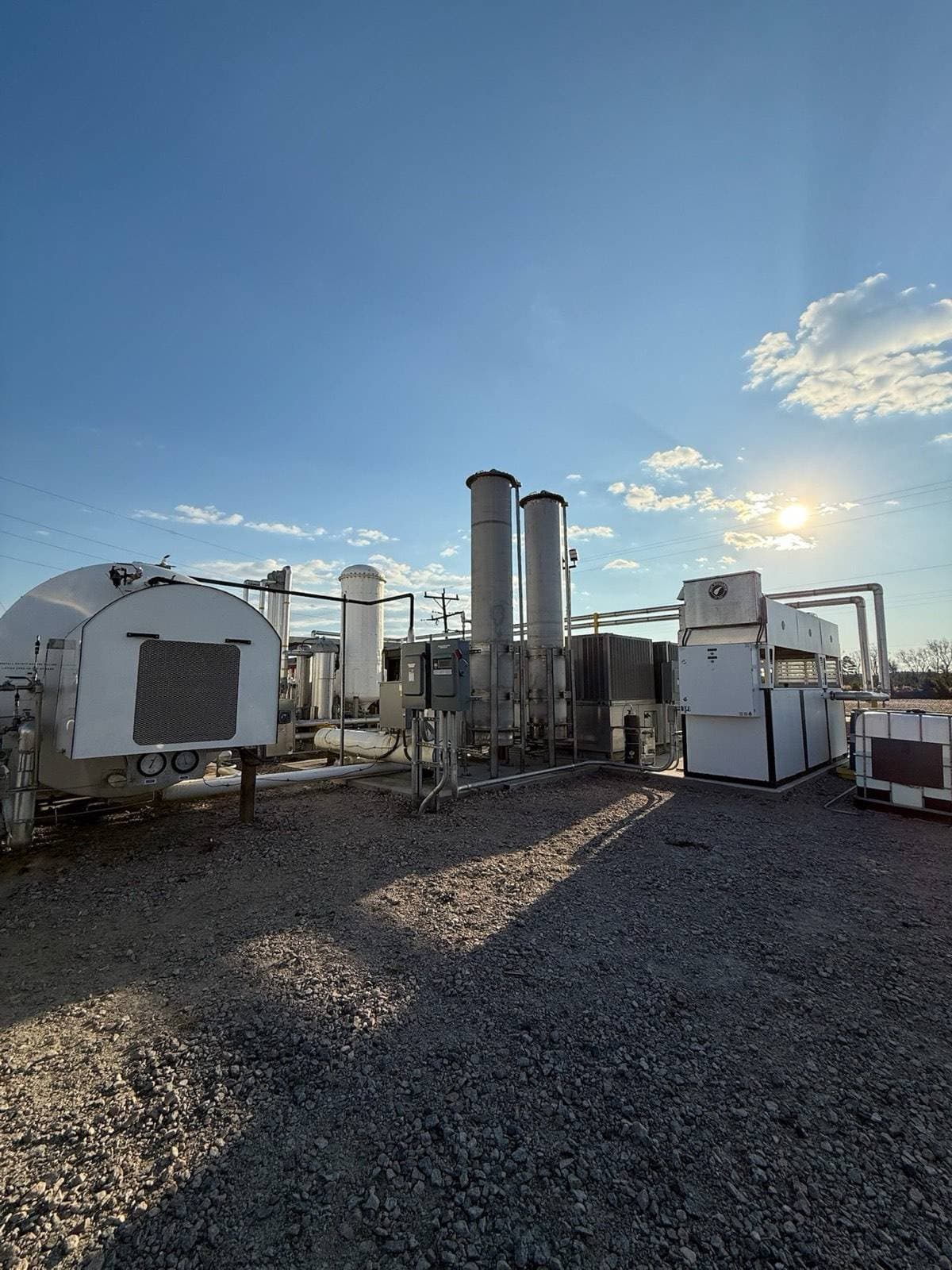
CleanCycleCarbon's first commercial facility in Lewiston, NC entered continuous commercial beverage grade production in December 2024. Additional projects are in active development across multiple feedstock types and geographies.
Every new project adds supply closer to the buyers who need it. Instead of shipping CO₂ from the Midwest to the Southeast, CleanCycleCarbon produces it regionally: shorter supply chains, lower transportation costs, and less vulnerability to logistics disruptions. The plants that feed the East Coast today, and the distributors that carry their product by state, are mapped on the East Coast beverage CO₂ supply page.
This is not a research initiative. It is infrastructure. Every facility we bring online is a permanent addition to the domestic CO₂ supply base.
About 70% comes from ethanol (Midwest), ammonia (Gulf Coast), and natural wells (Mississippi/Colorado). This concentration creates supply chain vulnerability.
CO₂ is essential for food, beverage, water treatment, and manufacturing. Disruptions halt production and cost millions. Diversified domestic supply reduces these risks.
By capturing CO₂ from diverse industrial sources (RNG, dairy, landfill, food waste) across multiple states and purifying it to beverage-grade quality. Each project adds capacity from a new source in a new geography.
Whether you buy CO₂ or produce emissions we can capture, let's talk.