The term clean carbon showed up in 11 Google searches that led to our site last month. None of those visitors found a page that answered their question. That is a problem worth fixing, because clean carbon is not just a buzzword. It is becoming a real purchasing criterion for CO₂ buyers who care about where their product comes from.
The concept is straightforward. Clean carbon refers to CO₂ that is sourced, captured, and purified in a way that reduces or eliminates net greenhouse gas emissions compared to conventional supply. But straightforward does not mean simple. The details matter, and right now there is no single standard that defines what qualifies.
Where Conventional CO₂ Comes From
Most merchant CO₂ in the United States is a byproduct of ammonia production, ethanol fermentation, or natural underground wells like Jackson Dome in Mississippi. These sources have supplied the market for decades. They produce reliable volumes and the purification infrastructure is mature.
But from a carbon accounting perspective, these sources have a problem. Ammonia production runs on natural gas reforming, a process that releases fossil carbon. Natural CO₂ wells are literally fossil carbon pulled from underground reservoirs. Even ethanol-derived CO₂, which starts as biogenic carbon absorbed by corn, gets complicated when you factor in the energy inputs of farming, transport, and distillation.
None of this mattered when CO₂ was just a commodity input. You bought it on purity and price. But sustainability commitments from major food and beverage companies are changing the conversation. Scope 3 reporting now includes the carbon intensity of purchased inputs, and CO₂ is one of them.
What Makes Carbon Clean
Clean carbon generally meets two criteria. First, the CO₂ is captured from a source that would otherwise release it to the atmosphere. Second, the capture and purification process itself has a low carbon footprint relative to the volume of CO₂ recovered.
Biogenic sources check both boxes more naturally than fossil sources. CO₂ from anaerobic digestion, landfill gas upgrading, or RNG production originates from organic waste that is already decomposing and releasing carbon. Capturing that CO₂ before it vents to atmosphere is not extracting new carbon from underground. It is intercepting carbon that is already in the active cycle.
This is the distinction that matters for buyers doing lifecycle analysis. A ton of CO₂ captured from an RNG upgrader has a fundamentally different carbon profile than a ton pulled from a fossil well or stripped from a natural gas reformer. The molecule is identical. The accounting is not.
Clean Is Not the Same as Pure
This is where the conversation gets confused. Purity and cleanliness are two separate attributes. A natural CO₂ well can produce extremely pure CO₂ that is entirely fossil-derived. A landfill gas capture system can produce biogenic CO₂ that is full of contaminants and unusable for food contact applications.
For a CO₂ buyer in the beverage industry, you need both. The CO₂ has to meet ISBT purity specifications for food safety. And increasingly, procurement teams want to know that the source aligns with their company's sustainability commitments. Clean carbon that fails purity specs is worthless to a bottling plant. Pure carbon from a fossil source is becoming harder to justify in a Scope 3 report.
The companies that can deliver both, beverage grade purity from a biogenic source, occupy a narrow and valuable position in the market.
How Cryogenic Purification Bridges the Gap
The challenge with biogenic CO₂ sources is contamination. Raw gas from an RNG upgrader or digester contains hydrogen sulfide, siloxanes, volatile organic compounds, and moisture. Getting that stream to beverage grade requires removing contaminants down to parts per billion levels. Most purification technologies struggle with this, especially at the smaller scales typical of distributed biogenic sources.
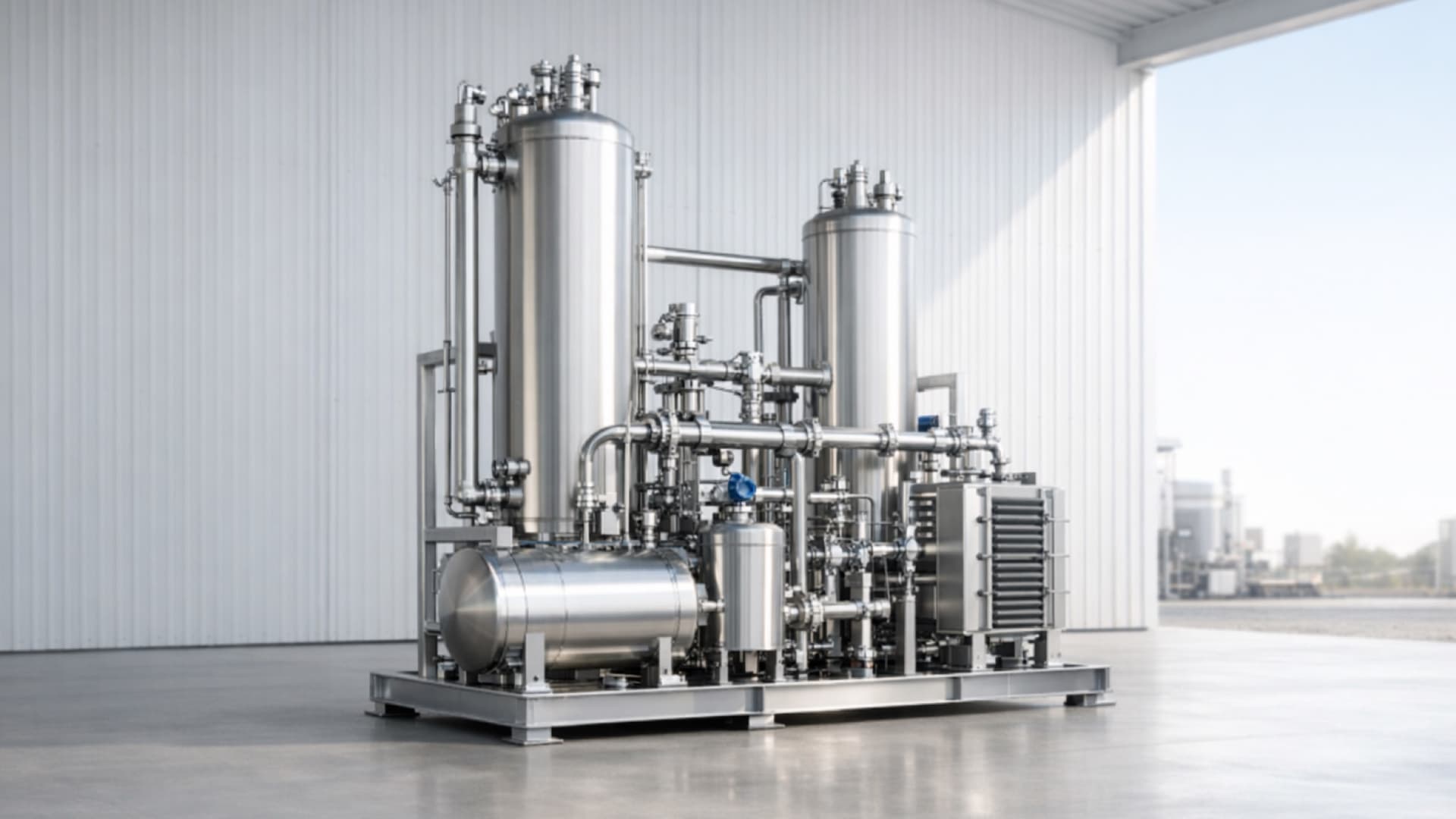
Cryogenic purification handles it. By cooling the gas stream and exploiting the different phase transition temperatures of CO₂ and its contaminants, a cryogenic system separates impurities through physics rather than chemistry. No solvents to degrade. No media to replace. The process produces consistent, beverage grade CO₂ from feedstocks that other methods cannot reliably clean up.
At our Lewiston, North Carolina facility, we take the CO₂ stream from an adjacent RNG upgrader and produce FDA-registered, ISBT-compliant, beverage grade liquid CO₂. The source is biogenic. The product is beverage grade. That combination is what clean carbon looks like in practice.
Why This Matters Now
Three trends are converging. First, large food and beverage companies are setting net-zero targets that require accounting for every input, including CO₂. Second, EPA and state-level regulations are expanding carbon intensity reporting requirements. Third, the 45Q tax credit now provides a financial incentive for carbon capture, but only for CO₂ that is genuinely captured and utilized, not just produced as a byproduct of an already-running process.
These three forces are creating a market where the origin story of your CO₂ matters as much as its purity certificate. Buyers who used to ask one question, "does it meet spec?", are now asking two: "does it meet spec, and where does it come from?"
What to Ask Your Supplier
If clean carbon matters to your procurement process, there are four questions worth asking. What is the original source of the CO₂? Is it biogenic or fossil-derived? What is the carbon intensity of the capture and purification process? And can the supplier provide documentation that supports those claims under your Scope 3 methodology?
Most conventional suppliers will not have good answers to the last two questions. That is not a criticism. The industry was not built around carbon accounting. But the market is moving in that direction, and the suppliers who can answer those questions today have a real advantage.
Clean carbon is not a marketing label. It is a measurable attribute of how CO₂ is sourced, captured, and delivered. The buyers who understand that distinction now will be better positioned when it stops being optional.