Beverage grade CO₂ is usually discussed as a purity number, but the number only matters if the supplier can prove how the gas was produced, cleaned, tested, stored, and delivered.
That distinction matters. A beverage producer does not buy a sustainability story. They buy an ingredient that touches the finished product. If the CO₂ carries the wrong contaminant, has too much moisture, arrives without documentation, or picks up impurities during handling, the buyer has a quality problem. In some cases, they have a food safety problem.
This is why beverage grade is not a loose marketing label. It is a verification process.
The Source Is Only The Starting Point
Every CO₂ source has a different contaminant profile. Ethanol fermentation, ammonia production, natural gas processing, and renewable natural gas upgrading can all produce commercial CO₂ streams, but they do not all produce the same raw gas.
RNG upgraders are a good example. Raw biogas typically contains methane and CO₂, plus smaller amounts of moisture, sulfur compounds, volatile organic compounds, and other trace contaminants depending on the feedstock and upstream treatment system. The upgrader separates methane for pipeline or vehicle fuel use. The CO₂ stream is concentrated, but concentrated does not mean beverage grade.
That is the point many people miss. A clean source helps. A biogenic source helps with carbon accounting. Neither one replaces purification and verification. Until the gas meets the spec and the documentation proves it, it is still a raw stream with potential value, not a finished product.
Purification Has To Match The Contaminants
The purification system has to be designed around the actual impurities in the stream. Removing moisture is different from removing sulfur. Removing oxygen is different from removing hydrocarbons. A process that works well on one source may not be enough for another.
CleanCycleCarbon's Lewiston, NC facility was built to capture CO₂ from the back end of an RNG upgrader and purify it to FDA certified beverage grade using our patent pending cryogenic purification process. The core challenge is not simply liquefying CO₂. The hard part is removing the trace contaminants that beverage and food customers cannot accept, especially hydrocarbons that can be present in RNG related streams.
Cryogenic purification is useful because temperature and phase behavior can be used to separate CO₂ from contaminants in a controlled way. The operating details matter, but the principle is straightforward: the system has to turn an inconsistent raw stream into a stable product that can meet a repeatable beverage grade specification.
Testing Turns A Claim Into A Product
A supplier saying "beverage grade" is not enough. The buyer needs test results that show the product meets the relevant specification. In practice, that usually means a certificate of analysis tied to a batch, lot, or load.
The certificate should show more than bulk purity. Beverage grade CO₂ buyers care about moisture, oxygen, odor, sulfur compounds, hydrocarbons, benzene, acetaldehyde, and other trace components that can affect taste, product stability, equipment, or consumer safety. A high purity number can still hide the wrong trace contaminant.
This is where verification becomes practical rather than theoretical. The question is not just whether the plant can produce clean CO₂ once. The question is whether the plant can produce it repeatedly, document it clearly, and give the customer confidence that each shipment is tied back to a controlled process.
Documentation Protects The Buyer
For beverage and food customers, CO₂ quality shows up in operations. If a load arrives out of spec, the buyer may have to reject it, delay production, clean equipment, quarantine product, or investigate quality complaints. None of that is theoretical when a plant is trying to keep a filling line running.
Good documentation reduces that risk. It gives the buyer a record of what was delivered, when it was tested, and which parameters were checked. It also gives distributors and end users a cleaner way to evaluate new supply. A new domestic source is valuable only if the product can move through the existing industrial gas system with the documentation customers already expect.
This is one reason CCC works with the industry rather than trying to route around it. The beverage CO₂ market already has distributors, logistics providers, customer requirements, and quality systems. New supply has to fit into that reality. It has to be clean enough, documented enough, and reliable enough to be usable.
Delivery Is Part Of Quality
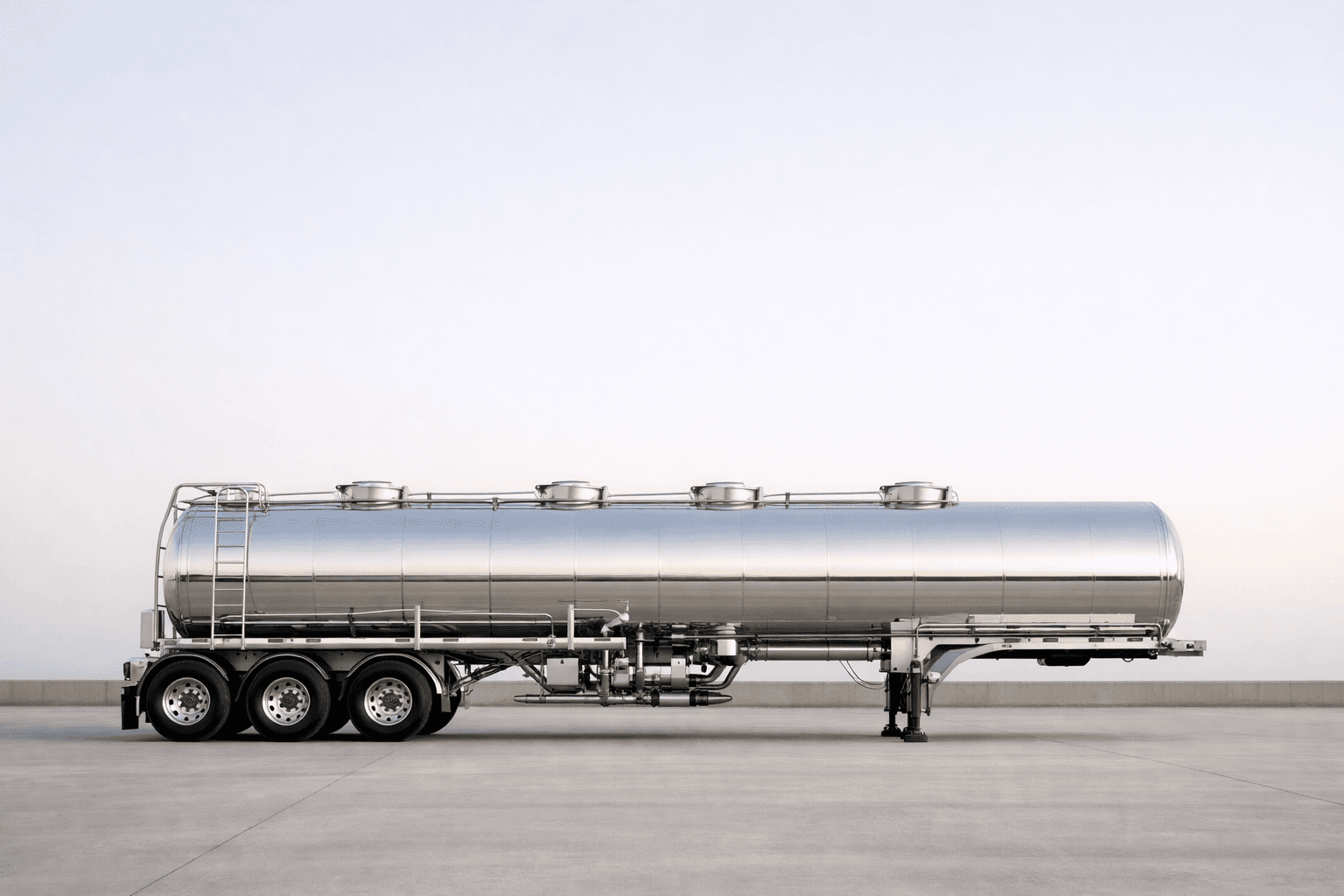
Verification does not stop at the plant gate. CO₂ can be produced correctly and still create problems if it is handled poorly. Storage tanks, transfer lines, tanker trailers, and delivery procedures all matter because the product has to stay clean after it leaves the purification system.
That is why beverage grade supply is an operating discipline, not a one time lab result. The plant, the loading process, the transportation chain, and the customer documentation all have to point in the same direction. If one part is weak, the buyer feels it.
What Buyers Should Ask
A practical buyer does not need to know every detail inside a purification skid. They do need clear answers to a few basic questions. Where does the CO₂ come from? What contaminants are expected from that source? How are those contaminants removed? What specification is the product tested against? How often is it tested? What documentation comes with each load? How is the product protected during storage and delivery?
Those questions separate a real beverage grade supplier from a source that simply has CO₂ available. Availability matters, especially in a tight market, but availability without verification does not solve the buyer's problem.
The market needs more domestic CO₂ supply. It also needs supply that beverage and food customers can actually use. That means capture, purification, testing, documentation, and delivery controls all working together. Beverage grade is not the label at the end of the process. It is the standard the entire process has to be built around.