Loading…

Loading…
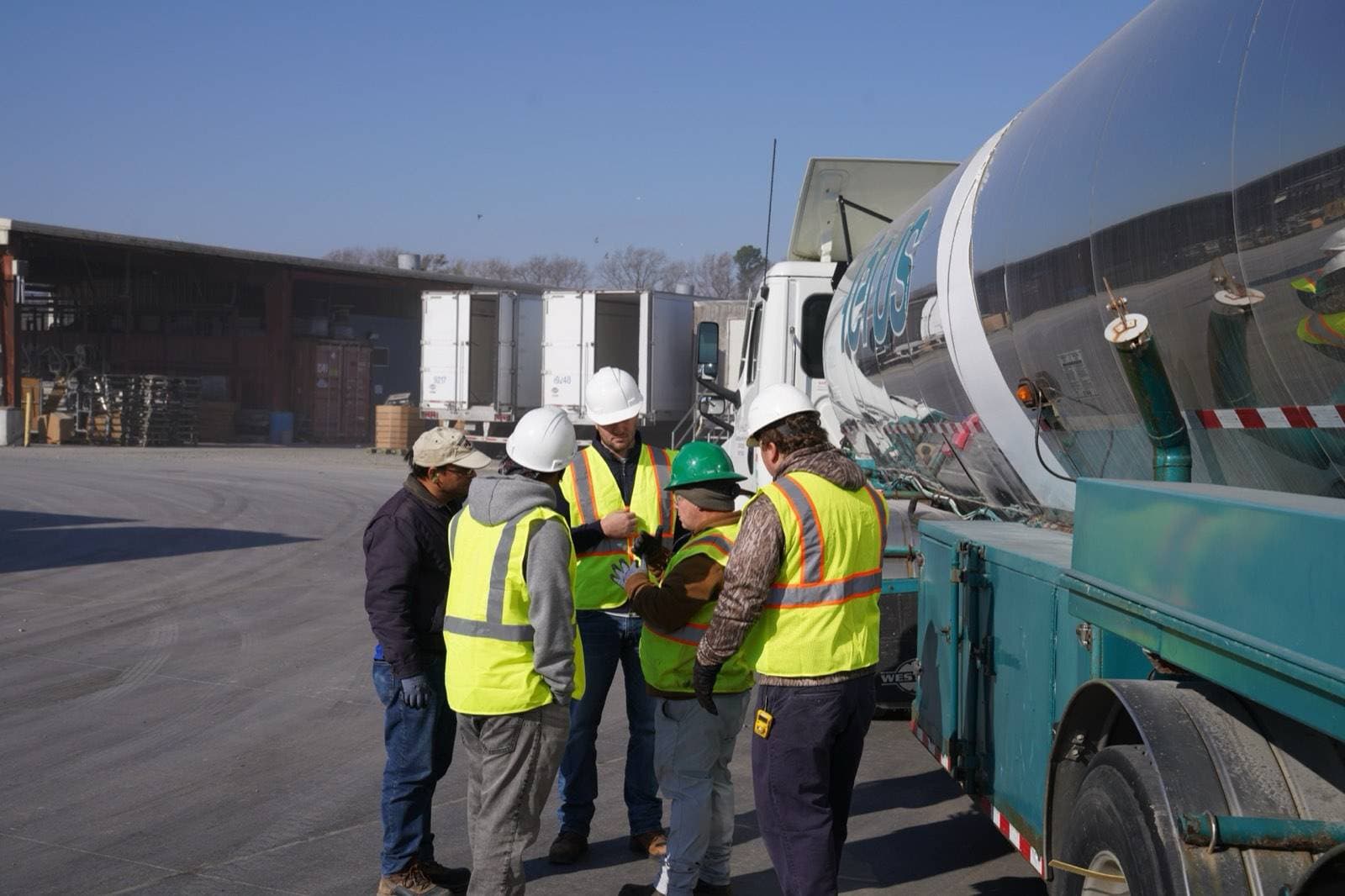
Domestic CO₂ Supply
FDA-registered, ISBT-specification CO₂ captured from industrial emissions. Produced domestically at commercial scale.
Beverage grade CO₂ is carbon dioxide that meets the ISBT specification: 99.9% purity minimum with tight limits on benzene, total sulfur, moisture, and more than 20 other trace contaminants. CleanCycleCarbon supplies it certified and FDA-registered, with a certificate of analysis and chain of custody documentation behind every batch.
CleanCycleCarbon produces beverage grade CO₂, the highest commercial purity standard, by capturing CO₂ from industrial emissions and purifying it through a proprietary cryogenic process. The result meets the International Society of Beverage Technologists (ISBT) specification at 99.9% purity or higher.
Our CO₂ is FDA-registered and suitable for direct use in carbonation, food processing, and any application requiring the highest grade of commercial carbon dioxide. Every batch is certified and traceable from point of capture to point of delivery.
Unlike traditional beverage grade CO₂ suppliers that depend on ethanol plants or ammonia facilities, CleanCycleCarbon captures CO₂ from diverse industrial sources including renewable natural gas upgraders and dairy biogas operations. This diversification strengthens the overall supply chain.
The US beverage grade CO₂ market depends on a small number of source types concentrated in specific regions. Roughly 70% of merchant CO₂ comes from just three source categories: ethanol plants, ammonia facilities, and natural wells. When those sources experience disruptions, as they did during the 2022 CO₂ shortage, beverage producers, food processors, and industrial buyers all feel the impact.
CleanCycleCarbon is building new domestic beverage grade CO₂ capacity from industrial emissions that would otherwise be released to the atmosphere. Our supply is not dependent on commodity market conditions, seasonal ethanol production, or Gulf Coast ammonia plant schedules. It comes from operating facilities that run continuously.
The US beverage grade CO₂ market has four structural categories: the industrial gas majors (Linde, Air Products, Airgas, Messer, Matheson), regional bulk distributors that specialize in beverage carbonation, the byproduct sources those companies buy from (ammonia complexes and Midwest ethanol plants), and a newer category of independent operators that capture biogenic CO₂ as their primary product. Most beverage producers buy from the first two categories. The last two are where the molecules actually come from.
| Category | Who is in it | Strength | Structural weakness |
|---|---|---|---|
| Industrial gas majors | Linde, Air Products, Airgas (Air Liquide), Messer, Matheson | National logistics, every grade, multi-source portfolios | Their CO₂ is a byproduct of other industries, so supply follows ammonia margins and ethanol seasonality, not beverage demand |
| Regional bulk distributors | Beverage carbonation specialists such as Meritus Gas and TCS CO2 | Local delivery, tanks, service relationships | They resell the same upstream molecules, so a source outage upstream hits them too |
| Byproduct sources | Ammonia complexes (CF Industries and others) and Midwest ethanol plants (POET, ADM) | Large volumes at low cost when the host plant runs | The host plant runs for its own market. Maintenance and commodity cycles take the CO₂ down with it |
| Independent biogenic capture operators | CleanCycleCarbon and other companies purpose-building capture at biogenic sources | CO₂ is the primary product, from year-round biogenic waste streams | Young category with a small installed base compared to the majors |
CleanCycleCarbon sits in the fourth category: an independent capture operator that develops, builds, and runs cryogenic purification systems at biogenic CO₂ sources, producing to the ISBT beverage grade specification at an FDA-registered facility. For how that model compares with staying on merchant supply, see alternatives to merchant CO₂ suppliers.
A quote for carbon dioxide is not the same as dependable beverage grade supply. A source can produce meaningful volume and still fail you if the product cannot meet specification, arrive with the right documentation, or move through the right delivery channel. Before committing volume, get direct answers to these questions:
Those answers determine whether CO₂ stays a quiet input or becomes a recurring production risk. For more depth on the standards behind them, read how beverage grade CO₂ is verified and the difference between food grade and beverage grade CO₂.
Beverage grade CO₂ meets the International Society of Beverage Technologists (ISBT) specification: 99.9% purity minimum with strict limits on moisture (under 20 ppm), total sulfur (under 0.1 ppm), benzene (non-detect), and dozens of other trace contaminants. It is the highest commercial purity grade and is required for any CO₂ that directly contacts food or beverages.
Traditionally, most beverage grade CO₂ comes from ethanol fermentation, ammonia production, and natural CO₂ wells. CleanCycleCarbon produces beverage grade CO₂ by capturing it from industrial emissions at renewable natural gas upgraders and other facilities, then purifying it through a proprietary cryogenic process.
Food grade CO₂ meets FDA requirements at 99.5% purity for applications where CO₂ does not directly enter the final product (like modified atmosphere packaging). Beverage grade meets the stricter ISBT specification at 99.9% purity with limits on over 20 individual trace contaminants. Industrial grade CO₂ has lower purity requirements and is used for welding, fire suppression, and other non-food applications.
Yes. CleanCycleCarbon's CO₂ is FDA-registered and meets beverage-grade purity standards suitable for carbonation of beverages. The product is certified, traceable, and enters the commercial supply chain through established distribution partners.
Check how much of the supplier's CO₂ is qualified for beverage grade use and how often that is verified, what upstream operation the CO₂ depends on, whether the purification process matches the source's contaminant profile, delivery distance and backup supply, and whether a certificate of analysis and chain of custody follow every load.
Contact us to discuss volume, specifications, and supply availability.