Carbon dioxide has its own line in the U.S. food code. Title 21 of the Code of Federal Regulations, section 184.1240, affirms it as generally recognized as safe for direct addition to human food. The moment CO₂ dissolves into a soda or blankets a sealed package of fresh food, it stops being a utility gas from a tank. It becomes a food ingredient, and the law treats it like one.
When a Gas Becomes an Ingredient
Most people picture CO₂ as something inert and anonymous inside a pressurized cylinder. On a canning line or in a brewery it is neither. It goes into the product and stays there, in the carbonation and in the headspace sealed above the food. At that point it carries the same legal weight as the water, the syrup, and the grain.
Food safety law does not care that this particular ingredient happens to be a gas. Whatever contaminants ride along inside the CO₂ end up in something a person drinks or eats. The finished product cannot be cleaner than the gas that went into it. That is the entire reason the standard for beverage CO₂ is written as tightly as it is.
GRAS Is a Condition, Not a Free Pass
GRAS status gets read as permission to relax. It is closer to the opposite. Affirming CO₂ as safe assumes the gas added to food actually meets a food grade purity specification and is handled under good manufacturing practice. The safety recognition is conditional on the material being clean and the process being controlled. Raw industrial CO₂ does not inherit that status just because the molecule is chemically identical.
Benzene makes the stakes concrete. It is a known carcinogen, and the beverage guidelines cap aromatic hydrocarbons measured as benzene near 20 parts per billion, a level no one can see, smell, or taste. Hydrogen sulfide runs the other direction. People detect it by smell at around 10 parts per billion, and it makes a drink taste wrong long before it does anything worse. Limits written that fine are why beverage grade names a real requirement, not a marketing tier.
The Standard That Defines the Requirement
The International Society of Beverage Technologists publishes the quality guidelines the industry treats as the working specification for beverage CO₂. The Food Chemicals Codex is the broader reference for food grade purity. Together they set the floor. Minimum purity sits at about 99.9 percent, with roughly twenty individual contaminants held to their own ceilings, from moisture and oxygen to sulfur compounds, nitrogen oxides, and volatile hydrocarbons.
A specification only means something if someone proves each load meets it. That is where food safety regulation stops being about the molecule and starts being about the plant that produced it.
The System Behind the Number
A number on a data sheet is only as trustworthy as the operation that generated it. A compliant supplier runs a HACCP plan, short for hazard analysis and critical control points, that maps every place contamination could enter the CO₂ and controls those points on every run. The plan is the discipline that keeps a clean process clean.
On top of HACCP sits a food safety management system benchmarked by the Global Food Safety Initiative. In practice that means a certified scheme such as FSSC 22000, SQF, or BRCGS, operated under current good manufacturing practice. These are not decorative badges. They are what a serious beverage buyer expects to see before a single load ever moves.
The Paper That Travels With the Gas
Every load of beverage grade CO₂ should arrive with a certificate of analysis. The certificate states what was measured in that specific batch and confirms it cleared the specification. It ties back to lot traceability, so that any delivered volume can be walked back to the source stream, the purification run that produced it, and the tests that cleared it.
Per load is the part that matters. A process that was in control last month says nothing definitive about the trailer at the dock today. A certificate that shows up after the gas is already carbonated is paperwork, not protection. Without it, a buyer is trusting a supplier's word, and no food safety auditor accepts that as evidence.
Why the Buyer Runs the Gate
From the outside, a bottler auditing its CO₂ vendor looks like procurement bureaucracy. It is not. Under the Food Safety Modernization Act, the beverage maker carries preventive control and supply chain obligations that require it to qualify a supplier before the ingredient enters the plant. That program exists so a hazard in an incoming ingredient gets caught at the receiving dock, not in a customer's glass.
This is why an unverifiable food grade claim is not a lesser version of the same product. It is unusable. The buyer's own food safety system will reject an ingredient it cannot document, which ends the conversation before anyone gets to the question of what the gas actually contains. A stream can be genuinely clean and still be closed off, because clean and provable are two different things and only one of them can be filed.
Off-Spec Is a Recall, Not a Quality Miss
When an ingredient fails its safety standard, the finished product becomes adulterated. That is a legal classification, not a customer service complaint. A carcinogen above spec fits the definition without much argument, and regulators do not weigh intent or reward a clean record on the loads before it. The Food Safety Modernization Act also gave the FDA authority to order a recall when it comes to that.
The liability follows the finished product, not the cylinder. The company whose brand is on the can is the one that issues the recall, answers the agency, and explains to customers what was in their drink. A single off-spec delivery can work its way through a production run and out across pallets, distributors, and shelves before anyone tastes anything wrong. That is why experienced buyers treat CO₂ sourcing as a compliance decision rather than a purchasing one.
Where a New Source Has to Land
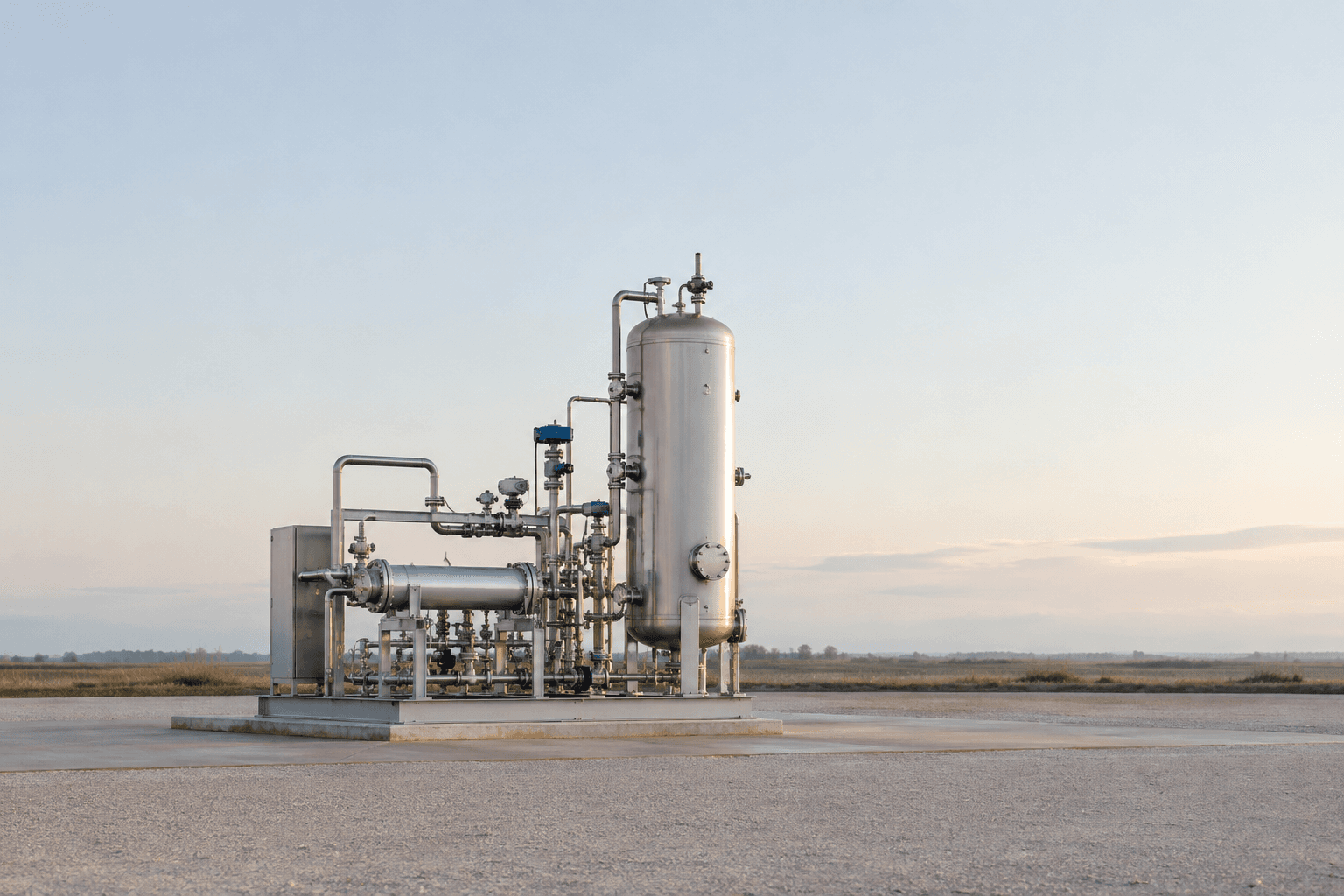
This is the standard any new CO₂ source has to clear to reach a beverage line, and it is a higher bar than purity alone. CleanCycleCarbon's facility in Lewiston, North Carolina was built to capture CO₂ from the back end of a renewable natural gas upgrader and purify it with a patent pending cryogenic process to full ISBT beverage grade specification. The purification is the hard engineering. The documentation is what makes the output usable, because a beverage customer is qualifying a supplier for a compliance file, not sampling a gas as a favor.
Beverage grade is not the top shelf of a product line. It is the name for CO₂ that has already met a food ingredient's legal requirements, on paper and in the tank. The gas has to be clean. The paperwork has to prove it. Read it as a marketing tier and you have misread the regulation, which is worth remembering the next time a supplier is quick to say beverage grade and slow to show the certificate.