When evaluating CO₂ capture and purification technologies, two approaches dominate the conversation: chemical absorption using amines or other solvents, and cryogenic distillation. Both work. Neither is universally better. The right choice depends on the specific application.
Chemical Absorption
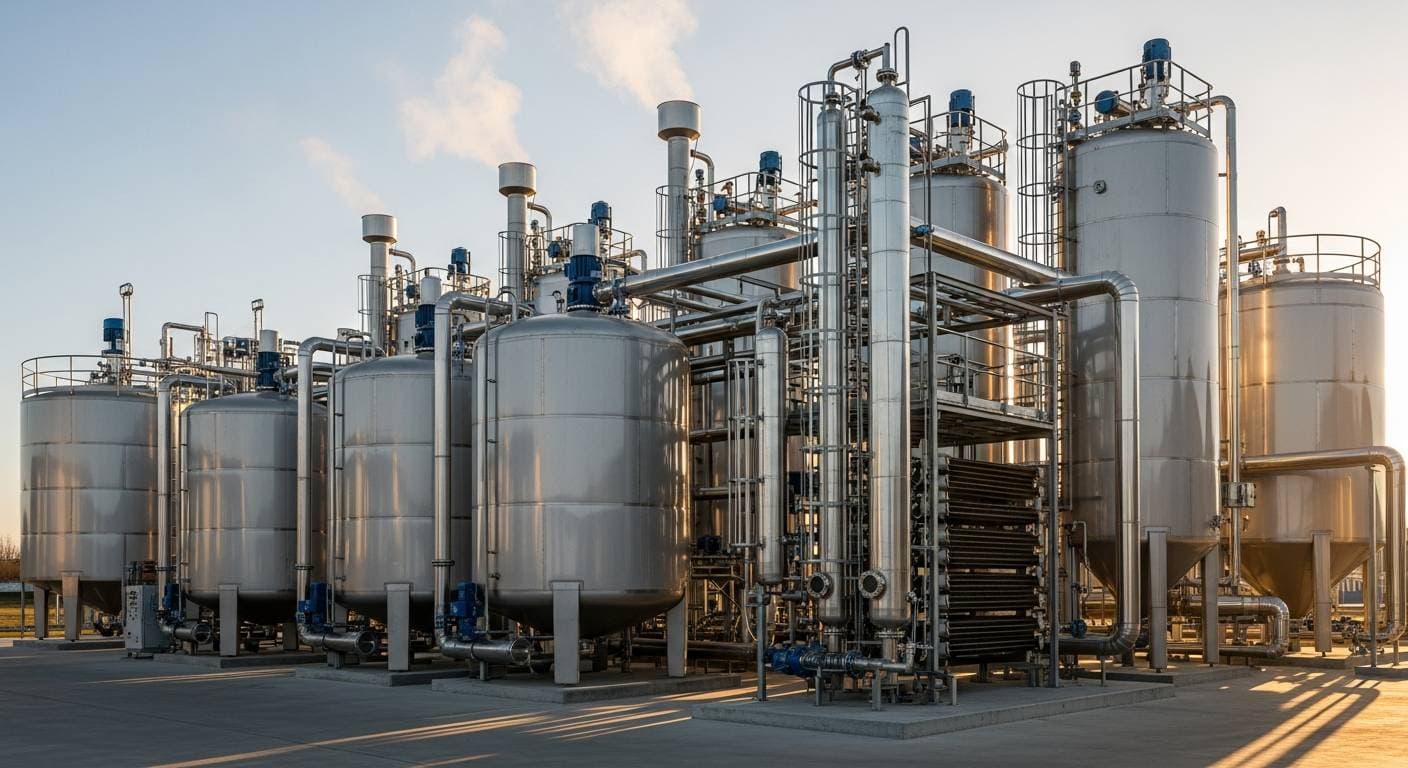
Chemical absorption uses a liquid solvent, typically an amine solution, to selectively absorb CO₂ from a gas stream. The CO₂ rich solvent is then heated to release the CO₂ and regenerate the solvent for reuse. This technology has been used commercially for decades in natural gas processing and ammonia production.
The primary advantage of chemical absorption is its ability to capture CO₂ from dilute streams. If your source gas is flue gas at 4 to 12 percent CO₂, amine scrubbing is often the most practical approach. The solvent provides the selectivity needed to pull CO₂ out of a gas that is mostly nitrogen.
The drawbacks are energy intensity and operational complexity. Regenerating the solvent requires significant heat input, typically 2.5 to 4 GJ per ton of CO₂ captured. The solvent degrades over time and needs replacement. Amine emissions and corrosion are ongoing operational concerns.
Cryogenic Purification
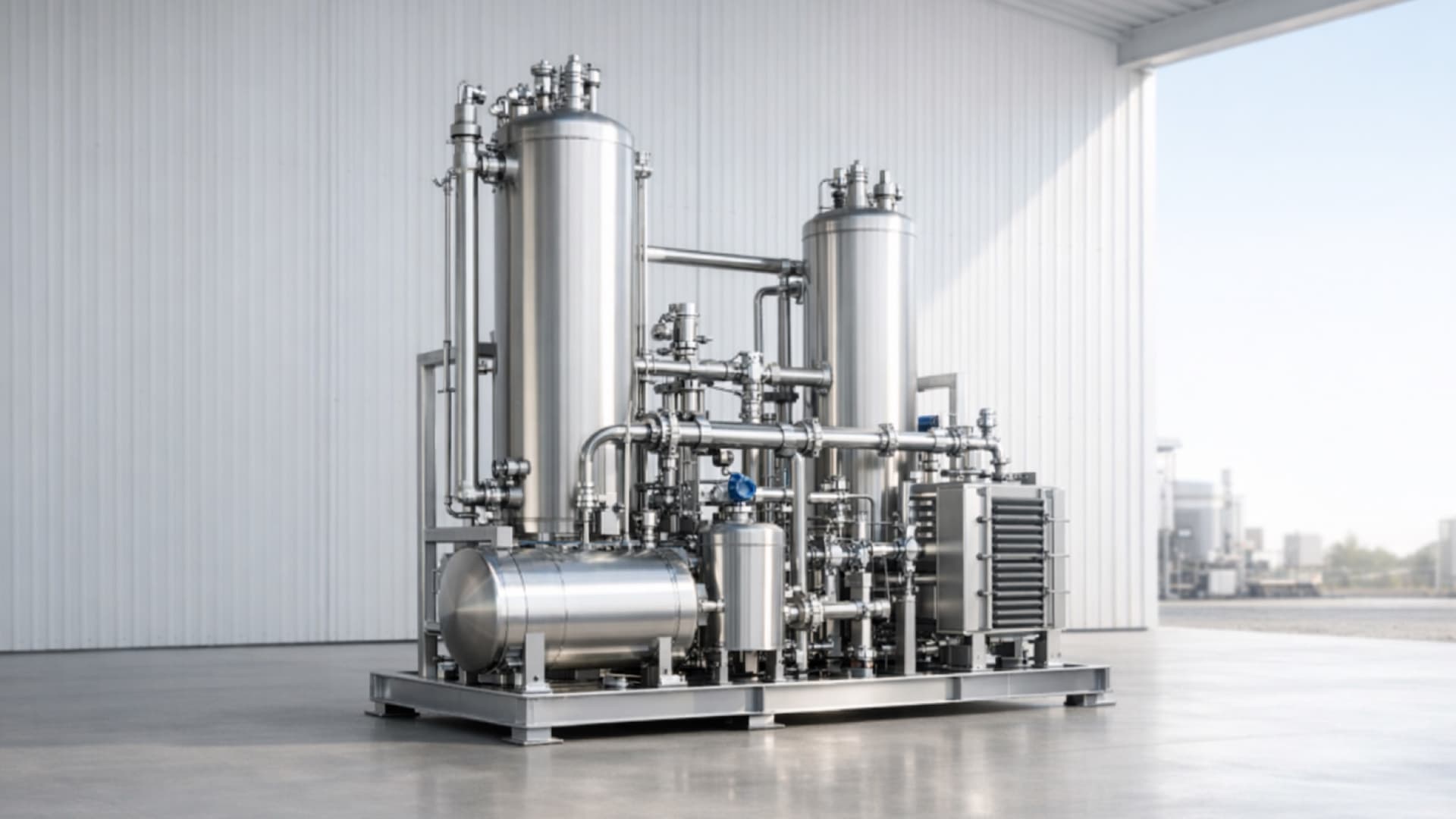
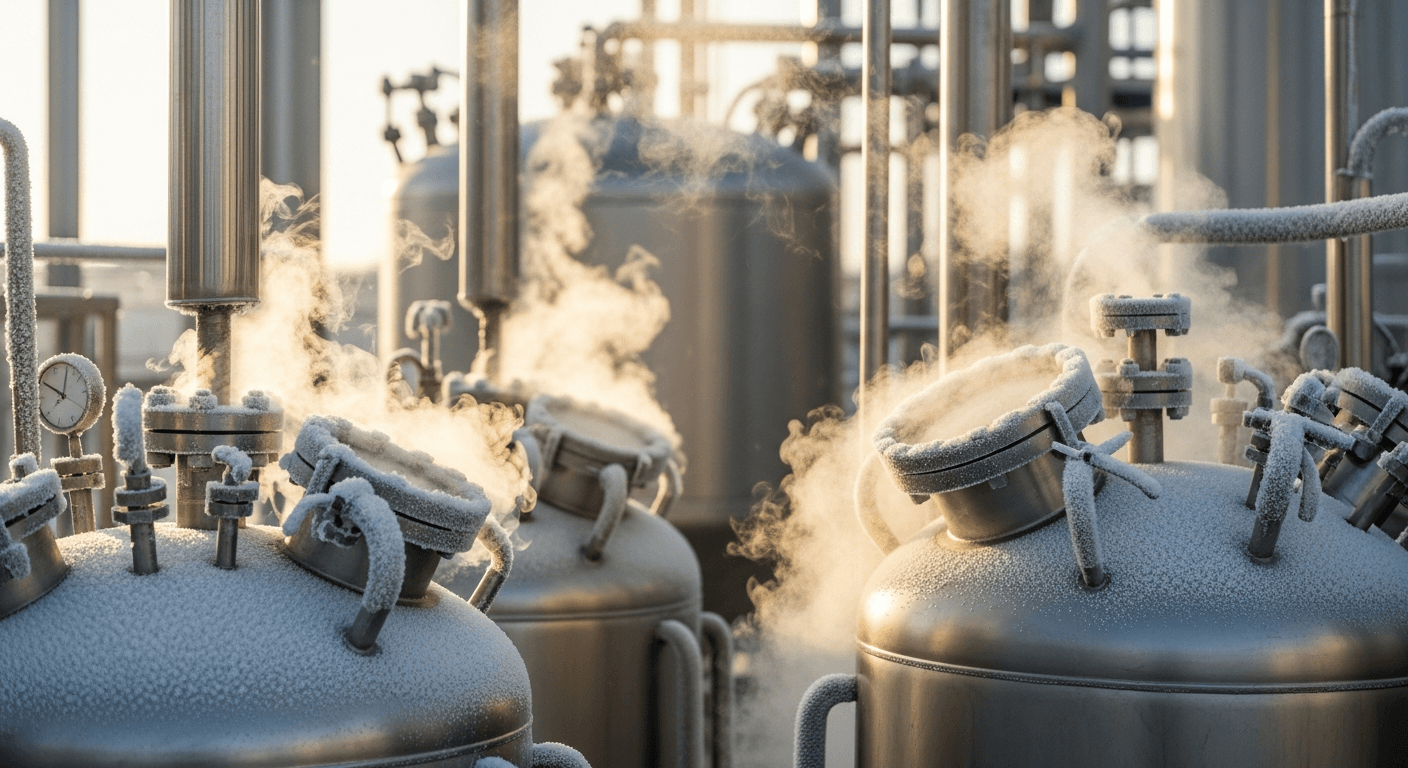
Cryogenic purification works by cooling the CO₂ stream to temperatures where it liquefies while lighter impurities like nitrogen, oxygen, and methane remain as gases and are separated. Distillation columns can then further purify the liquid CO₂ to extremely high purity levels.
The primary advantage of cryogenic systems is product purity. Cryogenic distillation routinely achieves 99.99 percent purity or higher, which is essential for beverage grade CO₂ production. The process also produces liquid CO₂ directly, eliminating a separate liquefaction step.
The drawback is that cryogenic systems work best with concentrated CO₂ streams. If you start with dilute gas, you need to do a pre concentration step before the cryogenic process, which adds cost and complexity.
Where Each Technology Fits
For post combustion capture from power plants and industrial boilers where CO₂ concentration is low, chemical absorption is typically the better fit. For concentrated streams like RNG upgrader tail gas, ethanol fermentation off gas, or ammonia plant CO₂, cryogenic purification is more efficient and delivers higher purity.
At CleanCycleCarbon, we use cryogenic purification because we work exclusively with concentrated CO₂ streams from RNG upgraders. The source gas is already 90 to 98 percent CO₂. Starting with that concentration, cryogenic processing is the most energy efficient path to beverage grade product.
The Hybrid Approach
In practice, most real world systems combine elements of both approaches. Pre treatment stages use adsorption and condensation to remove bulk contaminants before the CO₂ reaches the cryogenic section. The exact configuration depends on the source gas composition, the target purity, and the project economics.
The technology choice should follow from the application, not the other way around. Start with what you need the product to be, work backward to the source gas, and select the process that bridges the gap most efficiently.