Carbon capture sounds complicated. The reality is more straightforward than most people expect. At a high level, you are taking a gas stream that contains CO₂, removing everything that is not CO₂, cooling it until it becomes a liquid, and storing it in a tank until a truck picks it up.
The details matter. But the core process is not exotic. It is chemical engineering applied to a specific industrial problem. Here is how it works at an actual operating facility.
Start With the Gas
Every CO₂ capture system starts with a source gas. At an RNG upgrader, this is the tail gas that comes off the methane separation process. It is typically 90 to 98 percent CO₂ by volume, with the balance being methane, water vapor, hydrogen sulfide, and various trace contaminants that depend on the original biogas feedstock.
This concentration is important. Post combustion capture from a power plant starts with flue gas at 4 to 12 percent CO₂. You have to separate a small amount of CO₂ from a large volume of nitrogen. At an RNG facility the separation is already done. You start with concentrated CO₂. That changes the economics fundamentally.
Step 1: Remove the Bulk Contaminants
The first stage is removing water, hydrogen sulfide, and heavy hydrocarbons. These are the contaminants present in the highest concentrations and they need to come out before anything else can happen. Moisture removal uses desiccant beds or refrigeration. Sulfur compounds go through adsorbent media. Heavy hydrocarbons condense out in a chiller.
After this stage you have CO₂ that is roughly 99 percent pure. Good enough for some industrial applications. Not close to beverage grade.
Step 2: Polish to Parts Per Billion
Beverage grade CO₂ requires trace contaminant levels measured in parts per billion. Total sulfur below 0.1 ppm. Benzene non detect. Acetaldehyde below 0.2 ppm. Getting from 99 percent to 99.99 percent is where the real engineering happens.
Our polishing stages use a combination of catalytic oxidation, activated carbon, and proprietary adsorbent media designed for the specific contaminant profiles that come with biogas sources. This is where our patent pending technology makes the difference. Standard purification systems were built for cleaner feedstocks. Ours was built for biogas.
Step 3: Liquefaction and Storage
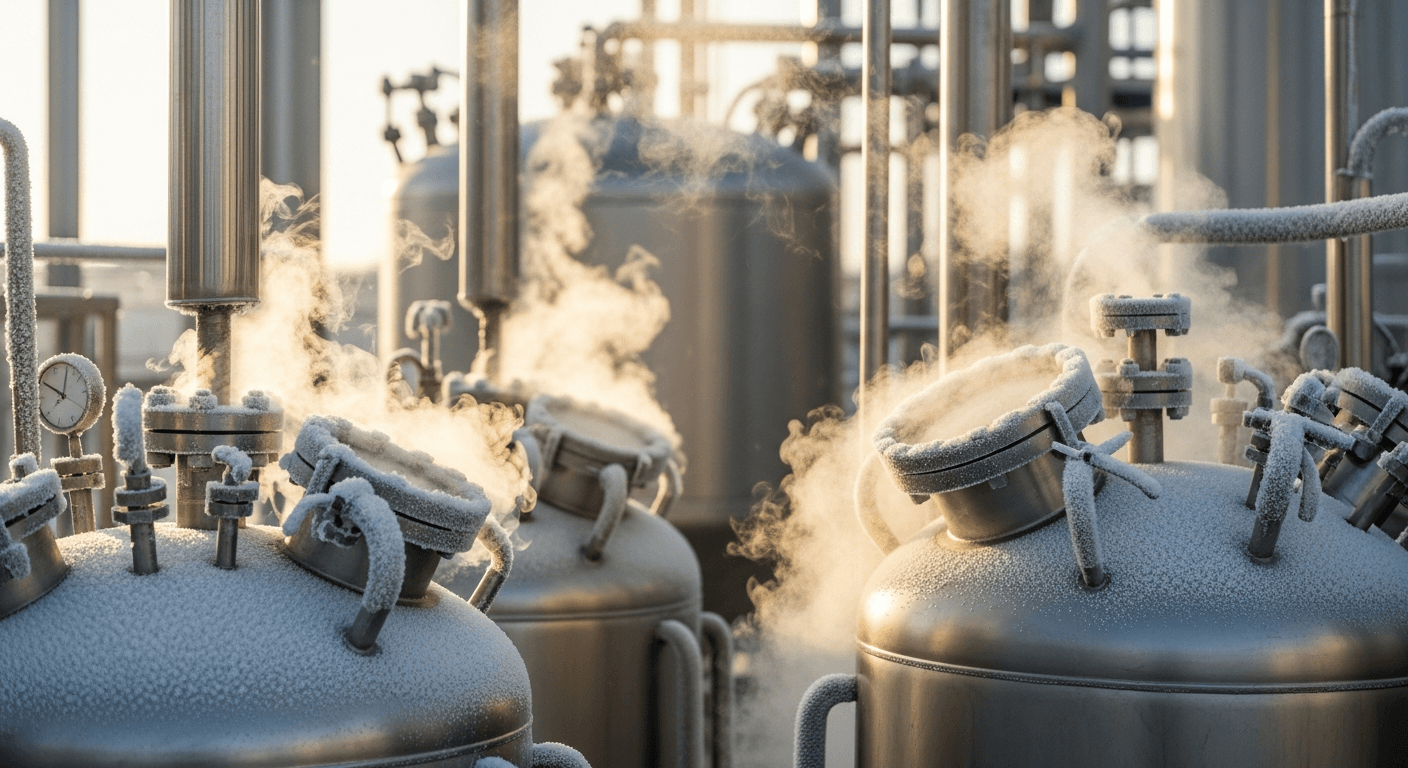
Once the CO₂ is polished to spec, it goes through a cryogenic system that cools it to roughly negative 20 degrees Fahrenheit and pressurizes it to about 300 psi. At these conditions CO₂ becomes a liquid. This is the same form it takes in every CO₂ transport tank and storage vessel in the industry.
The liquid CO₂ goes into an insulated storage tank on site. When the tank is full, a tanker truck backs up to the loading skid, connects, and hauls the product to the buyer. The whole system runs continuously, 24 hours a day, as long as the RNG upgrader is producing gas.
Step 4: Quality Verification
In line analyzers monitor CO₂ purity continuously. If the product drifts out of spec for any reason, an automated diversion system routes it away from the storage tank. Nothing off spec ever reaches a customer. Third party lab testing on a regular schedule provides independent verification that the product meets ISBT beverage grade standards.
The Whole System
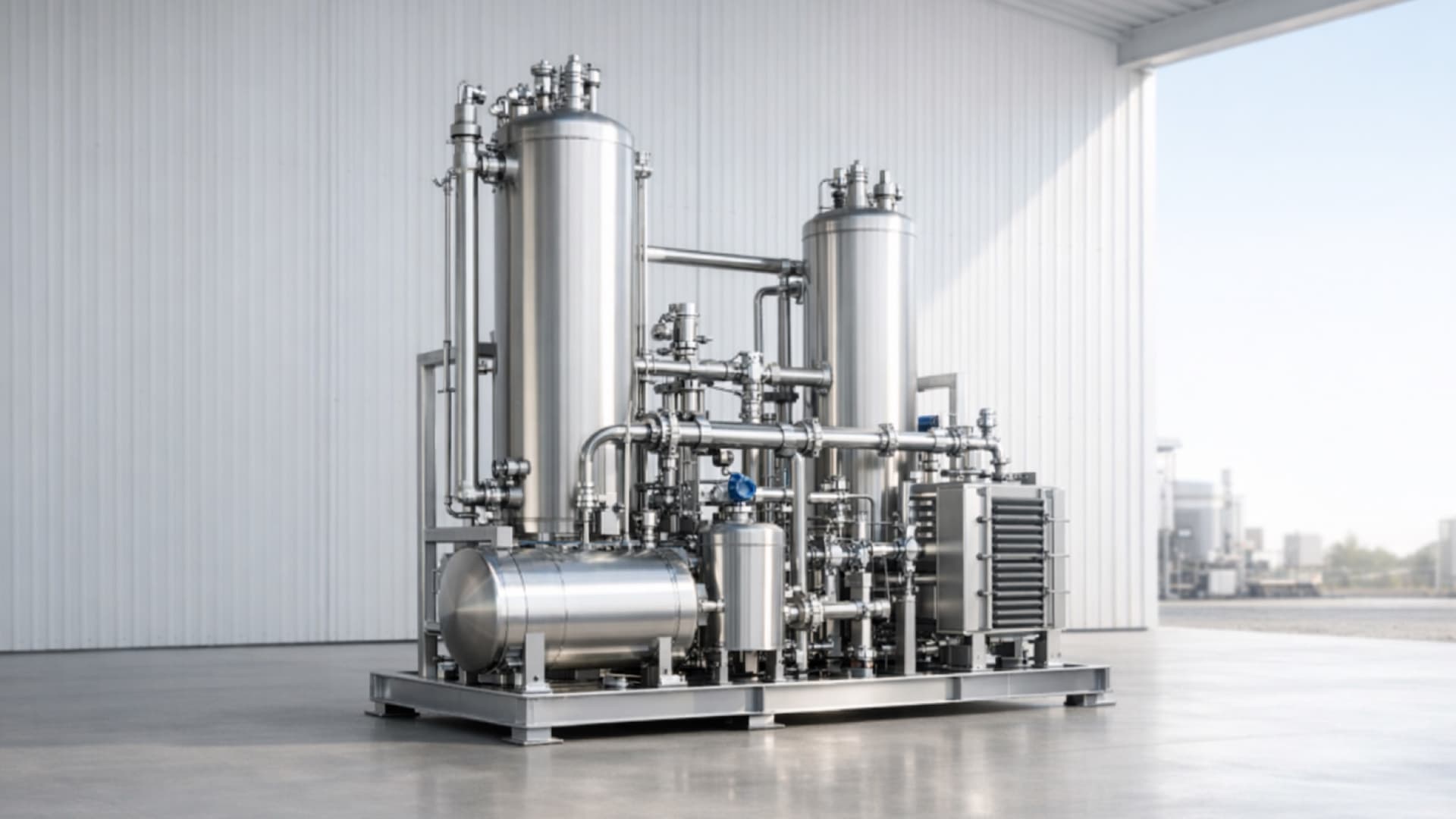
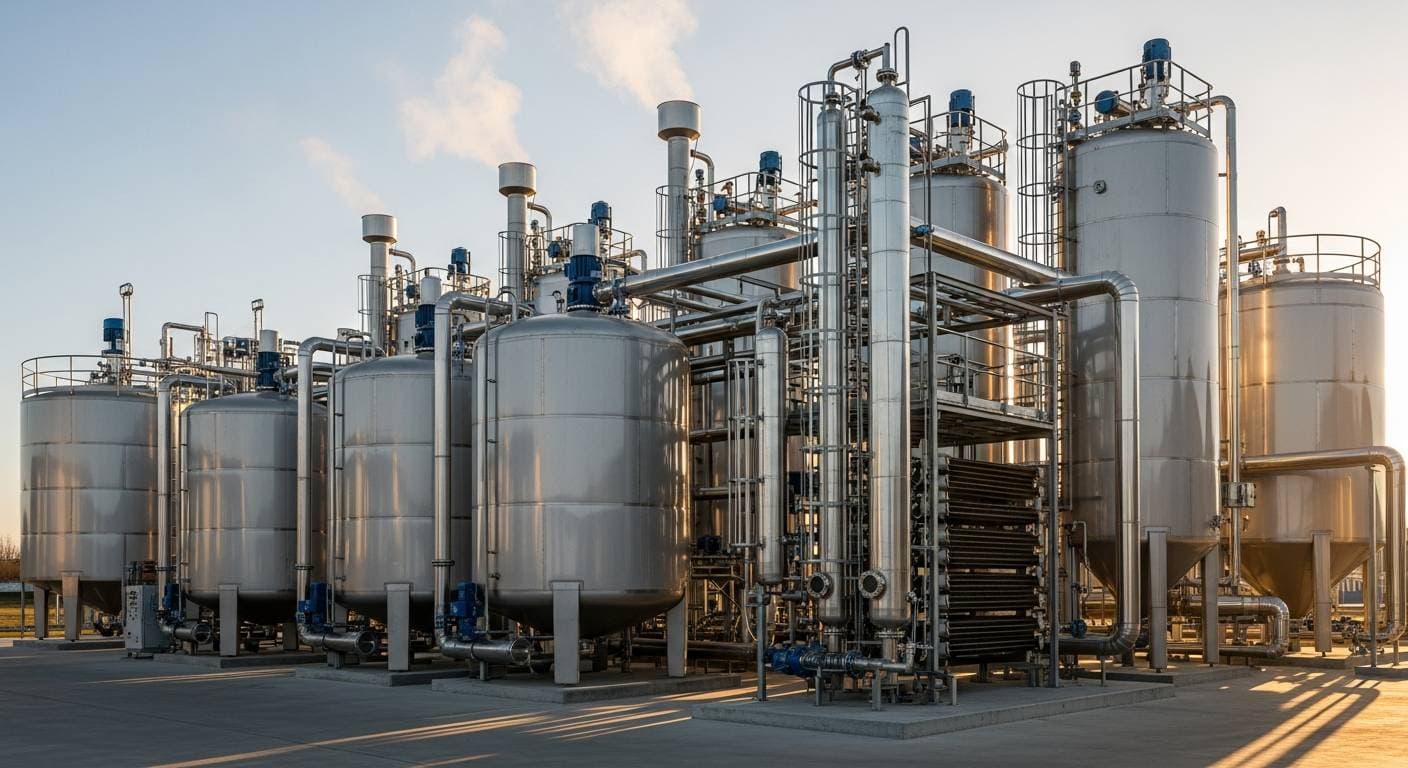
The entire system fits on a concrete pad roughly 60 to 80 feet on a side. It is modular, skid mounted, and designed to co locate at existing facilities with minimal site disruption. The footprint is small. The output is significant. A mid size system can produce 15 to 30 tons of beverage grade CO₂ per day from gas that was previously being vented to atmosphere.
That is what on site CO₂ capture looks like in practice. Not a research project. Not a pilot. A commercial system producing product that meets the strictest purity standards in the market, every day.